hidden
|
Ekaterinhofsky Island
EKATERINHOFSKY ISLAND washed by the Ekaterinhofka River, Tarakanovka River, and Bumazhny Canal. It is 40 hectares in area and 700 metres long and wide. The island formed after Bumazhny Canal was built in the second half of the 18th century
|
|
|
|
|
hidden
|
Elagin Bridges
ELAGIN BRIDGES, three bridges on the Elagin Island, with a spanning structure consisting of metal girders resting on concrete abutments and timber metal trestle piers
|
|
|
|
|
hidden
|
Elagin I.P. (1725-1793), writer
ELAGIN Ivan Perfilievich (1725-1793, St. Petersburg), statesman, historian, writer, Chief Master of the Hunt (1782), Fellow of the Russian Academy (1783). Graduated from the Gentry Army Cadet Corps in 1743. Arrested in connection with the A.P
|
|
|
|
|
hidden
|
Elagin Island Palace and Museum of Russian Applied and Decorative Arts
ELAGIN ISLAND PALACE AND MUSEUM OF APPLIED AND DECORATIVE ARTS AND INTERIOR of the late 18th - early 20th centuries (4 Elagin Island), opened in 1987 in Elagin Palace
|
|
|
|
|
|
hidden
|
hidden
|
Elagin Palace
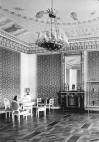
ELAGIN PALACE (4 Elagin Island), an Empire style architectural monument, constructed in the 1780s for I.P. Elagin, rebuilt in 1818-1822 (architect K.I. Rossi) for Empress Maria Fedorovna
|
|
|
|
|
hidden
|
Election districts
ELECTION DISTRICTS. There are two types of election districts on the territory of St. Petersburg: for the purpose of elections of deputies of the Legislative Assembly of St
|
|
|
|
|
hidden
|
Electric Apparatus Plant
ELECTRIC APPARATUS PLANT (3-7, Twenty-Fourth Line of Vasilievsky Island) is an open joint-stock company, the first plant in the country for design and production of machinery for electric power stations (including nuclear power stations) and power
|
|
|
|
|
hidden
|
Electrical Power Supply
ELECTRICAL POWER SUPPLY. Prototype electrical torches in St. Petersburg were lit in 1873 on Odesskaya Street. Twelve electrical torches designed by P.N. Yablochkov were installed in 1879 for the lighting of Liteiny Bridge
|
|
|
|
|
hidden
|
Elektrosila Plant
ELEKTROSILA (139 Moskovsky Prospect), an open joint-stock company from 1992, the largest power engineering plant in Russia. Founded in 1898, it was a unit of Siemens-Galske Company, situated at 34 First Line, Vasilievsky Island
|
|
|
|
|
hidden
|
Elena Pavlovna (1806/1807-1873), Grand Princess
ELENA PAVLOVNA (nee Frederica Charlotte Maria Princess of Wurttemberg) (1806-1873, St. Petersburg), Grand Princess, wife of Grand Prince Mikhail Pavlovich (from 1823)
|
|
|
|
|
hidden
|
Eliasberg K.I., (1907-1978), conductor
ELIASBERG Karl Ilyich (1907-1978, Leningrad), conductor, Honoured Worker of Art of the Russian Soviet Federative Socialist Republic (1944). In 1929 he graduated from Leningrad Conservatory where he majored in violin performance
|
|
|
|
|
hidden
|
Eliseev Family, merchants and bankers
ELISEEV FAMILY, merchants, entrepreneurs, public figures. Progenitor Peter Eliseevich Eliseev (1775-1825, St. Petersburg), a peasant from Yaroslavl Province, opened a greengrocery in St. Petersburg in 1813
|
|
|
|
|
hidden
|
Eliseevsky Shop
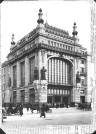
ELISEEVSKY SHOP (56 Nevsky Prospect / 8 Malaya Sadovaya Street) is the monument of architecture of Eclecticism and early Art Nouveau style. The main building housing a food store and a theatre lobby was built in 1902-03 (architect G. V
|
|
|
|
|
hidden
|
Elizaveta (Elizabeth) Petrovna (1709-1761), Empress
ELIZAVETA (Elizabeth) PETROVNA (1709-1761, St. Petersburg), Empress (since 1741), daughter of Peter the Great and Elizaveta I. Before taking the throne, she lived in a palace at the Tsaritsyn Medow in St
|
|
|
|
|
hidden
|
Embankments (entry)
EMBANKMENTS, engineering works built along the waterways of St. Petersburg from the early 18th century in order to stabilise banks and reclaim land. The first wooden embankments appeared in Gorodskoy Island on the left bank of the Neva River between
|
|
|
|
|
hidden
|
Emelyanovka, river
EMELYANOVKA, a river to the south-west of St. Petersburg, in Avtovo. Its name has been known since 1772; it probably originates from the name of a landowner. The headwaters of the river used to be 1 kilometre westwards of the intersection of
|
|
|
|
|
hidden
|
Empress Maria's Department of Institutions
EMPRESS MARIA'S DEPARTMENT OF INSTITUTIONS, a central public institution, which administered charitable organizations, as well as women’s and special educational institutions
|
|
|
|
|
hidden
|
Energetikov Avenue
ENERGETIKOV AVENUE, from Carl Faberge Avenue to Marshala Blucher Avenue. The avenue was laid in the 1960s as a part of the central ring route. It was built during the 1960s-80s
|
|
|
|
|
hidden
|
Eney Е.Е., (1890-1971), cinema artist
ENEY Evgeny Evgenievich (1890-1971, Leningrad), film designer, People’s Artist of the USSR in 1969. Studied at the Academy of Arts, Budapest, in 1910-14. Participated in the Civil War as a Hungarian Internationalist
|
|
|
|
|
hidden
|
Engelsa Avenue
ENGELSA AVENUE, a part of Vyborgskoe Freeway until 1918, running from Novosiltsevsky Lane past Third Verkhny Lane; the avenue is an extension of Bolshoy Sampsonievsky Avenue. The avenue was called so in honour of German socialist F. Engels (1820-95)
|
|
|
|
|
hidden
|
Engineering-Economical University, St. Petersburg State
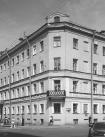
ENGINEERING-ECONOMICAL UNIVERSITY, St. Petersburg State, located at 27/9 Marata Street, dates back to the Higher Commercial Courses established in 1906 and attached to the Institute of People's Economy in 1920
|
|
|
|
|
hidden
|
English Church of Jesus Christ
ENGLISH CHURCH OF JESUS CHRIST, located at 56 Angliiskaya Embankment, was established in 1723 by members of the English community in the house of the Sheremetev family on the Bolshaya Neva River Embankment, rented by them
|
|
|
|
|
hidden
|
English Club
ENGLISH CLUB, English assembly, one of the first club-type establishments in Russia. It was founded on March 12, 1770 at Her Majesty Catherine II's pleasure by English entrepreneurs F. Gardner and C. Gardiner
|
|
|
|
|
hidden
|
English Park (Peterhof)
ENGLISH PARK is situated in the west part of Peterhof, in the lower course of Shinkarka River, to the north of Egerskaya Settlement and to the northwest of Lugovoy Park. Stary Petergof railway station is situated at its southwest outskirts
|
|
|
|
|
hidden
|
Engraving Chamber
ENGRAVING CHAMBER was an engraving workshop, a section of St. Petersburg Academy of Sciences of Russia which made engravings mainly for publishing houses, including book illustrations, scientific illustrations and tables
|
|
|
|
|
hidden
|
Enlightenment, publishing house, 1896-1922
ENLIGHTENMENT, a joint-stock publishing company which functioned in 1896-22. The publishing house was established by N.S. Tsetlin, a public figure and entrepreneur, together with the German Bibliographic Institute Company of J. Meyer
|
|
|
|
|
hidden
|
Entuziastov Avenue
ENTUZIASTOV AVENUE, from Peredovikov Street to Kommuny Street, in the area of Rzhevka - Porokhovye. The avenue was laid in the 1960s as a part of the central semicircular thoroughfare
|
|
|
|
|
hidden
|
Epokha (The Epoch), journal
EPOKHA (The Epoch), a monthly literary and political journal, published in 1864-65 in place of the suppressed Vremya. The editorial office was located at 1 and 7 Meshchanskaya Street (today Kaznacheyskaya Street)
|
|
|
|
|
hidden
|
Ermitazhny (Hermitage) Bridge
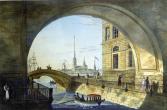
ERMITAZHNY (HERMITAGE) BRIDGE (in 1738 Naberezhny, in the middle of the 18th century known as Verkhnenaberezhny, or Zimnedvortsovy; was also called Dvortsovy (Palace) until 1828), across Zimnyaya Kanavka along Dvortsovaya Embankment
|
|
|
|
|