hidden
|
Grazhdanin (Citizen), journal newspaper, 1872-1914
GRAZHDANIN (Citizen), a journal on politics and literature which appeared in 1872-79 and 1882-1914 three times a week, and in 1888-95 as a daily. It was founded on private donations and with the support of Grand Prince Alexander Alexandrovich
|
|
|
|
|
hidden
|
Grazhdanka
GRAZHDANKA, an area to the north of St. Petersburg. Named after a German settlement (sometimes, referred to as Gorozhanka) that was formed in the second half of the 18th century on Staraya Murinskaya Road (the present-day site of Favorskogo Street)
|
|
|
|
|
hidden
|
Grazhdanskaya Street
GRAZHDANSKAYA STREET, running from Griboedova Canal to Voznesensky Avenue. In the 1730s, it was known as Third Perevedenskaya Street, and called Srednaya Meshchanskaya Street from 1739 to 1882, then called simply Meshchanskaya Street
|
|
|
|
|
hidden
|
Grazhdansky Avenue
GRAZHDANSKY AVENUE, running from Nepokorennykh Avenue to Suzdalsky Avenue. The avenue was named after the locality Grazhdanka. Originally called Road to Gorozhanka Village (name known since 1817)
|
|
|
|
|
hidden
|
Great Northern War of 1700-21
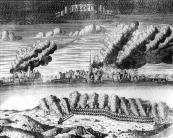
GREAT NORTHERN WAR OF 1700-21 was the war declared by a coalition of states from Central and Eastern Europe (the main participants were Russia, Denmark and Saxony) against Sweden
|
|
|
|
|
hidden
|
Great Patriotic War, Monuments to (entry)
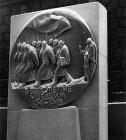
GREAT PATRIOTIC WAR, MONUMENTS TO. The first monuments devoted to the heroic defence of Leningrad appeared in 1944, immediately after the Lifting of the Siege, with concrete steles depicting the Order of the Patriotic War in Memory of the Defensive
|
|
|
|
|
hidden
|
"Great Terror"
"GREAT TERROR", a term introduced by American historian Robert Conquest (1971), referring to mass repression in the USSR in 1937-38 (in Russia, it was traditionally called "ezhovshchina"
|
|
|
|
|
hidden
|
Grebnoy Canal
GREBNOY CANAL (Rowing Canal) is located in the northern part of Krestovsky Island in Primorsky Victory Park at the place of the former Vinnovka River. In 1938, the Grebnoy Canal was projected to be 2 km in length and run from the head of the
|
|
|
|
|
hidden
|
Grech N.I. (1787-1867), writer, journalist
GRECH Nikolay Ivanovich (1787, St. Petersburg - 1867), journalist, publisher, writer, philologist, Privy Councillor (1843), corresponding member of the Petersburg Academy of Sciences (1827)
|
|
|
|
|
hidden
|
Grechesky Avenue
GRECHESKY AVENUE, running from Second Sovetskaya Street to Vilensky Lane. The avenue was laid in the 1860s and assumed its name in 1871 after the Greek Church of St. Demetrius of Thessalonica
|
|
|
|
|
hidden
|
Greek Church of St. Demetrius of Thessalonica
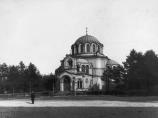
GREEK CHURCH OF ST. DEMETRIUS OF THESSALONICA, located at 6 Ligovsky Avenue, commissioned by entrepreneur D. I. Benardaki for the needs of the Greek community of St. Petersburg. It was constructed in 1861-65, in the Byzantine style (architect R. I
|
|
|
|
|
hidden
|
Green Lamp, Literary and Political Society
GREEN LAMP, literary and political society (1819-20). D. N. Barkov, N. V. Vsevolozhsky, F. N. Glinka, N. I. Gnedich, A. A. Delwig, P. P. Kaverin, Y. N. Tolstoy, S. P. Trubetskoy, A. D
|
|
|
|
|
hidden
|
Greigh S.K. (1735-1788),Admiral
GREIGH Samuil Karlovich (Samuel) (1735-1788), naval commander, Admiral (1782), honorary member of the St. Petersburg Academy of Sciences (1783). A Scot, from 1764 served in the Russian army with the rank of captain
|
|
|
|
|
hidden
|
Grekov I. I., (1867-1934), surgeon
GREKOV Ivan Ivanovich (1867-1934, Leningrad) surgeon, Doctor of Medicine (1901), honourable science worker (1933). He graduated from the Yuryev University (1894)
|
|
|
|
|
hidden
|
Grenadier's Bridge
GRENADIER'S BRIDGE (formerly Sampsonievsky), across the Bolshaya Nevka, joining Chapaeva Street and Petrogradskaya Embankment (on the left, the bank of the Bolshaya Nevka) with Grenadierskaya Street and Vyborgskaya Embankment
|
|
|
|
|
hidden
|
Grenadiers Life Guards Regiment
GRENADIERS LIFE GUARDS REGIMENT, Guards Infantry Regiment, formed in 1756, from 1775 – Life Grenadier Regiment, in 1813 designated Grenadiers Life Guards Regiment and assigned to the New Guards, in 1831 -assigned to the Old Guards
|
|
|
|
|
hidden
|
Gresser P.A., Chief Policeman, Head of City Administration 1882-92
GRESSER Peter Apollonovich (1833-1892, St. Petersburg), statesman, Lieutenant General (1883). Graduated from the First Cadet Corps in St. Petersburg (1850), and served in the Caucasus
|
|
|
|
|
hidden
|
Grevs I.M. (1860-1941), historian, regional ethnographer
GREVS Ivan Mikhailovich (1860-1941), historian, regional ethnographer, pedagogue and public figure. Lived in St. Petersburg since 1873. Grevs graduated from Larin Gymnasium (1879) and the Department of History and Philology of St
|
|
|
|
|
hidden
|
Griboedov A.S. (1794 or 1795 – 1829), writer, diplomat
GRIBOEDOV Alexander Sergeevich (1794 or 1795-1829), writer, musician and diplomat. Held the rank of civil counsellor and was a Minister Resident in Persia (1828)
|
|
|
|
|
hidden
|
Griboyedova Canal
GRIBOYEDOVA CANAL (the Ekaterininsky Canal in 1767-1923) starts from the Moika River at the Field of Mars and flows into the Fontanka River at Malo-Kalinkin Bridge. It is 5 km long and 32 meters wide with water flow of 3.1 - 3.4 m3
|
|
|
|
|
hidden
|
Grigorovich D.V. (1822-1899), writer
GRIGOROVICH Dmitry Vasilievich (1822-1899, St. Petersburg), prose writer, corresponding member of the Petersburg Academy of Sciences (1888). Studied in a private boarding schools of Moscow
|
|
|
|
|
hidden
|
Grigory (Chukov) (1870-1955), Metropolitan
GRIGORY (born Nikolay Kirillovich Chukov) (1870-1955), religious figure. After graduating from St. Petersburg Theological Academy in 1895, he took the post of the eparchial superintendent for theological schools of Olonets Eparchy
|
|
|
|
|
hidden
|
Grigoryev A.A. (1822-1864), critic, poet
GRIGORYEV Apollon Alexandrovich (1822-1864, St. Petersburg), poet, prose writer, literary and theatre critic, collegiate assessor (1857). A graduate of the Faculty of Law of Moscow University, he lived in St
|
|
|
|
|
hidden
|
Grigoryev Boris Dmitrievich (1886-1939), artist
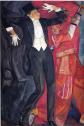
GRIGORYEV Boris Dmitrievich (1886-1939), artist. He studied at the Stroganov Art School under Dmitry Shcherbinovsky (1903-07), in the Academy of Arts under Alexander Kiselev and Dmitry Kardovsky (1907-13)
|
|
|
|
|
hidden
|
Grilles (entry)
GRILLES. St. Petersburg boasts a number of unique metal grilles, created in the course of three centuries. Wrought grilles of bars with (sometimes gilded) decorative figures made from flat iron bars (the grille of the Ekaterininsky (Catherine)
|
|
|
|
|
hidden
|
Grimm D.I., Grimm G.D., Grimm G.G., architects
GRIMMS, a dynasty of architects, theorists, art historians and teachers. David Ivanovich Grimm (1823, St. Petersburg - 1898), architect, representative of Eclecticism, master of the Russo-Byzantine style, historian of Caucasian Architecture
|
|
|
|
|
hidden
|
Grin A.S. (1880-1932), writer
GRIN (real name Grinevsky) Alexander Stepanovich (1880-1932), writer. For the first time came to St. Petersburg either in 1905 or in 1906 illegally, drifted together with A. I. Kuprin, who introduced him into literary circles
|
|
|
|
|
hidden
|
Grivtsova Lane
GRIVTSOVA LANE, running from the Moyka River Embankment to Sennaya Square. Starting in 1739, the lane was known as Malaya Sarskaya Street. From the 1770s to 1871, the section extending to the Ekaterininsky Canal was called Konny Lane
|
|
|
|
|
hidden
|
Grot Y.K., (1812-1893), linguist
GROT Yakov Karlovich (1812 - 1893, St. Petersburg), philologist, historian, Full Member of the Petersburg Academy of Sciences (1855). Graduated from the Tsarskoselsky Lyceum in 1832. Professor at the Alexandrovsky Lyceum (1853-62)
|
|
|
|
|
hidden
|
Gryazny Island
GRYAZNY ISLAND situated between the Olkhovka River and the Ekaterinhofka River, south of where the Tarakanovka River flows into the latter. The name dates back to 1838
|
|
|
|
|