hidden
|
Gutuevsky Bridge
GUTUEVSKY BRIDGE (formerly Seldyanoy), across the Ekateringofka River parallel to Dvinskaya Street, joining Obvodny Canal with the former Seldyany Brawl on Gutuevsky Island (hence both names)
|
|
|
|
|
hidden
|
Gutuevsky Island
GUTUEVSKY ISLAND situated at the mouth of the Bolshaya Neva River and washed by Morskoy Canal in the west and the Ekaterinhofka River in the east. It is 320 hectares in area, 3.8 kilometres long and 1.2 kilometres wide
|
|
|
|
|
hidden
|
Gutuyevskaya Harbour
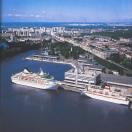
GUTUYEVSKAYA HARBOUR is an artificial rectangular Harbour (600x300 meters, 7 meters deep)located in the northern part of Gutuyev Island (hence the name). After its reconstruction during the building of the Morskoy Canal in 1874-75
|
|
|
|
|
hidden
|
Gymnasia (entry)
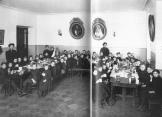
GYMNASIA, institutions of intermediate general education. In pre-revolutionary Russia they were mainly established with the purpose of training pupils for university and service in state institutions
|
|
|
|
|
hidden
|
Gypsy Choruses (entry)
GYPSY CHORUSES, up to the early 20th century they were called "Moscow Gypsy Choruses" (that is, Russian) in contrast to Hungarian, Spanish, Crimean. Practically all soloists had stage names, their real names having been for the most part lost
|
|
|
|
|
hidden
|
Hairdresser's Saloons
HAIRDRESSER'S SALOONS. In Russian, 'parikmakherskaya', from the German 'Perucke', or periwig, and Macher, or maker. A public service institution. In the 1790s, there were both Russian (43 master hairdressers and 20 trainees) and German (73 master
|
|
|
|
|
hidden
|
Handicraft (overview)
HANDICRAFT, an important part of St. Petersburg economy in the 18th to the early 20th centuries, started developing soon after the city was founded as craftsmen were coming here from various handicraft centres of the country
|
|
|
|
|
hidden
|
Harbour
HARBOUR is an area in the western part of Vasilievsky Island. Soon after the foundation of St. Petersburg, earthworks and the artillery battery were put up here to protect the entrance to the Bolshaya Neva River
|
|
|
|
|
hidden
|
Hastie V.I. (1753-1832), architect.
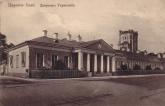
Hastie Vasily Ivanovich (William) (1753-1832), architect. Native of Switzerland, in 1784 he came to Russia by invitation of C. Cameron, settling in Tsarskoye Selo on Angliiskaya Street
|
|
|
|
|
hidden
|
Head Magistrate
HEAD MAGISTRATE, the public institution of the highest rank. It was established in St. Petersburg on the decree of tsar Peter the Great in 1720 to function as the principal establishment in charge of city magistrates of other cities and towns. In St
|
|
|
|
|
hidden
|
Head of the city administration
HEAD OF THE CITY ADMINISTRATION, the highest administrative and police rank in St. Petersburg. The post was introduced with the publication of the Regulations as of March 20, 1873 on St. Petersburg cessation from St
|
|
|
|
|
hidden
|
Health Service (common)
HEALTH SERVICE, PUBLIC. The first stationary medical institutions in St. Petersburg were military hospitals for the army and the navy (opened in 1715 and 1717)
|
|
|
|
|
hidden
|
Heat Supply Services
HEAT SUPPLY SERVICES. The introduction of the heating system in Leningrad is usually said to have appeared in 1924, when the first heating line laid from electric power station No.3 (104 Fontanka River Embankment) to building No
|
|
|
|
|
hidden
|
Heating plants (general article)
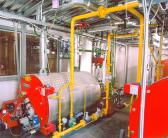
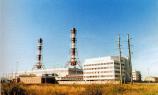
HEATING PLANTS (heat electric power plants) are stations generating electricity and providing heat and hot running water to businesses and residential houses. The first attempts of a comprehensive approach to the problem of generating electricity
|
|
|
|
|
hidden
|
Heifits I.E. (1905-1995), film director
HEIFITS Iosif Efimovich (1905-1995, St. Petersburg), film director, script writer, teacher, People’s Artist of the USSR (1964), Hero of Socialist Labour (1975)
|
|
|
|
|
hidden
|
Her Majesty’s Cuirassier Life Guards Regiment
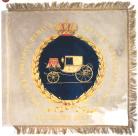
HER MAJESTY’S CUIRASSIER LIFE GUARDS REGIMENT a cavalry guards regiment, raised in 1704 as the Dragoon Regiment of Portes, from 1708 was known under the name of Nevsky Dragoon Regiment, from 1733 known as the Life Cuirassier Regiment
|
|
|
|
|
hidden
|
Hermitage
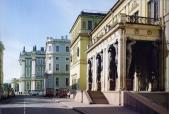
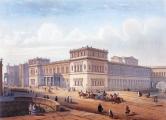
HERMITAGE, State Museum (32-38 Dvortsovaya Embankment) is one of the biggest museums in the world, exhibiting art as well as cultural and historical objects. It consists of 5 inter-connected buildings: the Winter Palace, the Small Hermitage
|
|
|
|
|
hidden
|
Hermitage Buildings (entry)
HERMITAGE BUILDINGS. Hermitages were compulsory for all large court estates such as Peterhof and Tsarskoe Selo built as detached pavilions for confidential meetings from the early 18th century
|
|
|
|
|
hidden
|
Hermitage Theatre
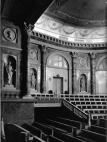
HERMITAGE THEATRE at 32 Dvortsovaya Embankment is a monument of 18th century architecture, is part of the complex of Hermitage buildings. It is the only 18th century theatre hall preserved in St. Petersburg
|
|
|
|
|
hidden
|
Hero-city Park
HERO-CITY PARK is situated in the south of St. Petersburg, between Pulkovskoe Highway, Moscovskoe Highway and Dunaysky Avenue. It was laid out on the site of orchards and vegetable gardens in 1972-80 and had an area of 25 hectares
|
|
|
|
|
hidden
|
Heroes of the Soviet Union
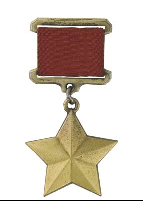
The highest honorary title bestowed for personal or joint services to the State attributed to heroic exploits – the Hero of the Soviet Union – was established by the Resolution of the Central Executive Committee of the USSR dated April 16, 1934
|
|
|
|
|
hidden
|
Heroic Defenders of Leningrad, Monument to
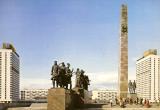
HEROIC DEFENDERS OF LENINGRAD, MONUMENT TO was opened in the Pobedy Square 9 June 1975 (the metro station memorial hall was opened 23 February 1978). Architectural-sculptural composition is dominated by a 48-metre obelisk assembled from blocks of
|
|
|
|
|
hidden
|
Herzen A.I. (1812-1870), revolutionary publicist
HERZEN Alexander Ivanovich (1812-1870), revolutionary, publicist, writer, philosopher. He graduated from the Faculty of Physics and Mathematics at Moscow University (1833). He came to St
|
|
|
|
|
hidden
|
Hessen A.E. (1917- 2001 ), architect-restorer
Hessen Alexander Ernestovich (1917, Petrograd - 2001, St. Petersburg), architect, restorer, one of the founders of the school of scientific architectural restoration in Leningrad. He graduated from the Academy of Fine Arts (1939)
|
|
|
|
|
hidden
|
Hessen I. V. (1865/66-1943), public figure
HESSEN Iosif Vladimirovich (1865-1943), lawyer, public and political figure. In 1885 he enrolled at the Faculty of Law of the Petersburg University, and was arrested the same year for ties with People's Liberty and exiled to Ust-Sysolsk
|
|
|
|
|
hidden
|
Highest Organs of State Power (entry)
HIGHEST ORGANS OF STATE POWER. The first higher organ of state power to function in St. Petersburg was the Senate founded by Tsar Peter the Great in 1711. The Supreme Privy Council was founded under Empress Catherine I (1725-30)
|
|
|
|
|
hidden
|
Hilferding P. (1710-1768), dancer, ballet master
HILFERDING Franz Antoine Christophe (1710- 1768), Austrian dancer, ballet master, teacher. Studied dancing in Paris under M. Blondy. In 1759-65, he held the post of court ballet master in St. Petersburg, staging over 20 ballets
|
|
|
|
|
hidden
|
Hippodromes
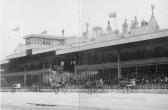
HIPPODROMES. A hippodrome was built in 1861 in the north part of Krasnoe Selo (where in 1772 the first races in Russia were held) L.N. Tolstoy described it in his novel Anna Karenina (after 1945, a municipal forest park was laid out there)
|
|
|
|
|
hidden
|
His Imperial Majesty Personal Escort
This separate guards unit was formed of Caucasian hill men by Emperor Nikolay the First in 1839 and was named the Life-Guards Caucasian Troops. It had all rights and privileges of the Old Guard
|
|
|
|
|
hidden
|
His Imperial Majesty Personal Life-Guards Mixed Infantry Regiment
His Imperial Majesty Personal Life-Guards Mixed Infantry Regiment was established on August 17, 1907 to serve as personal guards of the Emperor. It consisted of the headquarters and two battalions
|
|
|
|
|