hidden
|
Apartment Houses (entry)
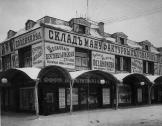
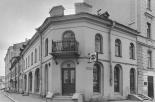
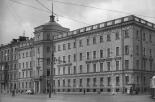
APARTMENT HOUSES, houses constructed to receive a profit by leasing the apartments. They appeared in St. Petersburg in the early 18th century, proliferated after the decree of 1769 that authorized shops to be arranged on the ground floors
|
|
|
|
|
hidden
|
Apollon (Apollo), journal
APOLLON (Apollo), a literary journal. It was founded in 1909 by critic S. K. Makovsky, and named after the Ancient Greek God of Sun, Light and Art. In 1909-10 it came out on a monthly basis as a supplement of the Literaturny Almanakh
|
|
|
|
|
hidden
|
Applied Chemistry, the State Scientific Centre of the Russian Federation
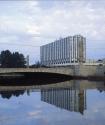
APPLIED CHEMISTRY, the State Scientific Centre of the Russian Federation (the Federal State Unitary Factory, the Russian Scientific Centre for Applied Chemistry), at 14 Dobrolyubova Avenue, is the biggest chemical organisation in Russia
|
|
|
|
|
hidden
|
Apraksin F.M., (1661-1728), Admiral
APRAKSIN Fedor Matveevich (1661-1728), Count (1709), General Admiral (1708), statesman and military officer, associate of Tsar Peter the Great. Brother of P.M. Apraksin and Tsarina Marfa, wife of Tsar Fedor Alexeevich
|
|
|
|
|
hidden
|
Apraksin P.M. (1659-1728), statesman
APRAKSIN Peter Matveevich (1659-1728), count (from 1710), statesman, acting secret councillor (1725), brother of F.M. Apraksin. In 1698-1708, he was a Novgorod Voevode (military commander)
|
|
|
|
|
hidden
|
Apraksin Yard
APRAKSIN YARD, a group of shops, storehouses, and offices built in the 18th and 19th centuries in the area belonging to the Counts Apraksin (hence the name) and bounded by the Fontanka River, Sadovaya Street, Lomonosova Street, and Apraksin Lane
|
|
|
|
|
hidden
|
Aptekarsky Island
APTEKARSKY ISLAND, (Apothecary Island), situated in the estuary of the Neva River between the Karpovka River separating it from Petrogradsky Island, Malaya Nevka River, and Bolshaya Nevka River. It is 198 hectares in area, 2.7 kilometres long and 1
|
|
|
|
|
hidden
|
Aptekarsky Lane
APTEKARSKY LANE, translated as Pharmacy Lane, between Millionnaya Street and Moika River Embankment. It was laid in 1730s and called Aptekarskaya Street from the early 1730s to 1780s. The lane was so named after the Central Pharmacy moved from SS
|
|
|
|
|
hidden
|
Apukhtin A.N. (1840-1893), poet
APUKHTIN Alexey Nikolaevich (1840-1893, St. Petersburg), poet, prose writer. He graduated from The Law School (1859, schoolmate of P.I. Tchaikovsky), then he served in the Ministry of Justice (until 1862)
|
|
|
|
|
hidden
|
Apyshkov V.P. (1871-1939), engineer
APYSHKOV VLADIMIR PETROVICH (1871-1939, Leningrad), engineer, architect, architectural theorist. Graduated from the Nikolaevskaya Engineer Academy (1901), from 1905 lectured there
|
|
|
|
|
hidden
|
"Aquarium"
"AQUARIUM", an entertainment theatre-garden, set by entrepreneur G.A. Alexandrov (died in 1910), who took a lease on a piece of land at Kamennoostrovsky Avenue in 1886 (on the site of present-day houses Nos
|
|
|
|
|
hidden
|
Arakcheev A.A. (1769-1834), statesman
ARAKCHEEV Alexey Andreevich (1769-1834), count (1799), statesman and military commander, artillery general (1807). Graduated from the Artillery Engineering Gentry Cadet Corps in St
|
|
|
|
|
hidden
|
Aranovich S.D., (1934-1996), film director
ARANOVICH Semen Davidovich (1934-1996), film director, People’s Artist of Russia (1994). Graduated as a director from the All-Russian State Institute of Cinematography in 1965
|
|
|
|
|
hidden
|
Araya F., (1709 - after 1775), composer
ARAYA Francesco (1709 - after 1775), Italian composer, first foreign Court Kapellmeister, composer of the first opera staged in St. Petersburg (The Might of Love and Hatred, 1736), and the first opera in Russian (Tsefal and Prokris, libretto by A.P
|
|
|
|
|
hidden
|
Archaeographical Committee
ARCHAEOGRAPHICAL COMMITTEE, a scientific institution established under the Ministry of Public Education in 1834 to publish materials collected by the Archaeographical Expedition of the Academy of Sciences in 1829-32 with historian and archaeographer
|
|
|
|
|
hidden
|
Archaeological Committee
ARCHAEOLOGICAL COMMITTEE, an organisation and research centre of archaeology in Russia. It was founded in St. Petersburg in 1859 under the Ministry of the Imperial Court and Apanages, meetings were held in the Winter Palace
|
|
|
|
|
hidden
|
Archaeological Institute
ARCHAEOLOGICAL INSTITUTE, named the Imperial Archaeological Institute until 1917, educational research institution training in archaeology and archives management. Founded in 1877 on the initiative of N. V
|
|
|
|
|
hidden
|
Archaeological Monuments in St. Petersburg and its Outskirts
ARCHAEOLOGICAL MONUMENTS IN ST. PETERSBURG AND ITS OUTSKIRTS, including artefacts (man-made items), settlements and burial places. The oldest archaeological monuments on the territory of the region date back to the Mesolithic Period (before the
|
|
|
|
|
hidden
|
Archangel Michael Cathedral
ARCHANGEL MICHAEL CATHEDRAL, located at 61 Dvortsovy Avenue, Lomonosov. A monument of Neo-Russian architecture built in 1911-14 (architect A.K. Minyaev) to commemorate the 300th anniversary of the Romanov dynasty
|
|
|
|
|
hidden
|
Architects of Our City, publication series
ARCHITECTS OF OUR CITY, the series of publications about outstanding architects of St. Petersburg - Leningrad published by the Leningrad Publishing House from 1971. The series contains books about the life and work of S. I. Chevakinsky, M. G
|
|
|
|
|
hidden
|
Architectural Styles (entry)
ARCHITECTURAL STYLES, recognizable systems of architectural compositional techniques, forms and decor, whose differences are caused by social and cultural environment, aesthetic preferences and the type of architectural culture of a particular epoch
|
|
|
|
|
hidden
|
Architectural-Construction University, St. Petersburg State
ARCHITECTURAL-CONSTRUCTION UNIVERSITY, St. Petersburg State, located at 4 Second Krasnoarmeiskaya Street, was established in 1832 as the College for Civil Engineering. It was renamed the Institute for Civil Engineering in 1882
|
|
|
|
|
hidden
|
Archive of Cinema, Photography and Audio Documents, St. Petersburg
ARCHIVE OF CINEMA, PHOTOGRAPHY AND AUDIO DOCUMENTS, St. Petersburg (2 Muchnoy Lane) was founded in 1936 as Leningrad Regional Photo Archive, 1941-66 it was a part of the State Archive of the October Revolution and Leningrad Region Socialistic
|
|
|
|
|
hidden
|
Archive of the Russian Academy of Sciences
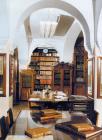
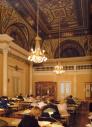
ARCHIVE OF THE RUSSIAN ACADEMY OF SCIENCES, also known as the St. Petersburg Department (1 Universitetskaya Embankment) was the first scientific archive in Russia
|
|
|
|
|
hidden
|
Archives (entry)
ARCHIVES, state repositories, scientific institutions, departmental associations collect, preserve, and work with documents and materials on the history of modern life
|
|
|
|
|
hidden
|
Archives, St. Petersburg
ARCHIVES, SAINT PETERSBURG, the Central State Archives of St. Petersburg situated at 15 Varfolomeevskaya Street. They were founded as the Leningrad Regional Archives of the October Revolution in 1936 and renamed as the State Archives of the October
|
|
|
|
|
hidden
|
Arctic and Antarctic Institute
ARCTIC AND ANTARCTIC INSTITUTE of the Russian Hydrometeorological Service, situated at 38 Beringa Street. It was founded in 1920 as the Northern Fishery Research Expedition of the Scientific and Technical Department of the All-Russian Council for
|
|
|
|
|
hidden
|
Arctic and Antarctic, Museum of the
ARCTIC AND ANTARCTIC, Museum of the, located at 24а Marata Street. It is the only museum in Russia and the biggest museum in the world devoted to natural environment of the polar regions of the Earth
|
|
|
|
|
hidden
|
Arefyev А.D. (1931-1978), painter
AREFYEV Alexander Dmitrievich (1931-1978), painter. Lived in Leningrad from his childhood, he studied in a secondary drawing school in 1942-49, expelled from the ninth grade for formalism, studied at the Medical Institute in 1950-53
|
|
|
|
|
hidden
|
Arkharov N.P., Governor General in 1795-97
ARKHAROV Nikolay Petrovich (1740-1814), statesman, Infantry General (1796). In 1755 he was enlisted in Preobrazhensky Life Guard Regiment. In 1772-82, he was Moscow Chief Policeman, in 1782-84, he was Moscow Civil Governor, in 1784-96
|
|
|
|
|