hidden
|
Youth Union
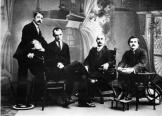
YOUTH UNION, a society of artists established by former members of the group Treugolnik (Elena Guro, Mikhail Matyushin, Eduard Spandikov, Iosif Shkolnik, Savely Schleifer, et al). The Youth Union was chaired by Eduard Spandikov (1910-13) and by L.I
|
|
|
|
|
hidden
|
Yudenich N.N. (1862-1933), commander, general of infantry
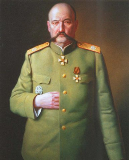
YUDENICH Nikolay Nikolaevich (1862-1933), military leader, Infantry General (1915). Graduated from the Alexandrovsky Military School (1881) and the Nikolaevskaya General Staff Academy (1887) in St. Petersburg
|
|
|
|
|
hidden
|
Yudina M.V. (1899-1970), pianist
YUDINA Maria Veniaminovna (1899-1970), pianist, teacher. In 1921 she graduated from the Petrograd Conservatory, where she studied under A.N. Esipova and L.V. Nikolaev
|
|
|
|
|
hidden
|
Yunger E.V. (1910-1999), actress
YUNGER Elena Vladimirovna (1910 - 1999, St. Petersburg), actress, People's Artist of the Russian Soviet Federative Socialist Republic (1950). In 1925-30, she studied at the Leningrad Institute for Art History
|
|
|
|
|
hidden
|
Yuntolovskaya Forest Dacha
YUNTOLOVSKAYA FOREST DACHA is a reserve in Primorsky District of St. Petersburg with the total area of approximately 2,000 hectares. It is bordered by the Yuntolovka River and the Kamenka River flowing into the Lake Lakhtinsky Razliv and the fields
|
|
|
|
|
hidden
|
Yureneva V.L. (1876-1962), actress
YURENEVA Vera Leonidovna (1876-1962), actress, Honoured Artist of the Russian Soviet Federative Socialist Republic in 1935. She came to St. Petersburg in the 1890s, to complete the Drama Courses of the Theatre College in 1902
|
|
|
|
|
hidden
|
Yury Gagarin Avenue
YURY GAGARIN AVENUE, between Blagodatnaya Street and Moskovskoe Freeway. From the 1910s to 1961 the avenue bore the name Narymsky Avenue, after the village of Narym in Tomskaya Region
|
|
|
|
|
hidden
|
Yuryev Y.M., (1872-1948), actor
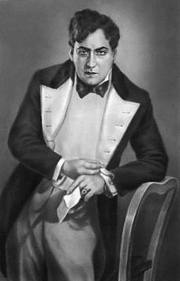
YURYEV Yury Mikhailovich (1872-1948, Leningrad), actor, pedagogue, theatre worker, People's Artist of the USSR (1939). Graduated from drama courses at the Moscow Drama School (1893)
|
|
|
|
|
hidden
|
Yusupov Family, Princes
YUSUPOV FAMILY, a family of princes of Nogay origin, who lived in Russia from the 16th century. Several family members were closely associated with St. Petersburg
|
|
|
|
|
hidden
|
Yusupov Palace (94 Moika River Embankment)
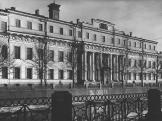
YUSUPOV PALACE (94 Moika River Embankment), a monument of Neoclassical architecture. In the mid-18th century, the lot belonged to P.I. Shuvalov, and a small two-storied stone house standing on it, was extended and expanded by architect J.V
|
|
|
|
|
hidden
|
Yusupovsky Garden
YUSUPOVSKY GARDEN (Yusupov Garden) was laid out in the 1790s on the territory of the estate of Prince B. G. Yusupov on the section between the Fontanka River and the Sadovaya Street. The total area is 4.3 hectares
|
|
|
|
|
hidden
|
Yutkevich S.I. (1904-1985), film director
YUTKEVICH Sergey Iosifovich (1904, St. Petersburg - 1985), film director, theorist, stage designer, People’s Artist of the USSR (1962), Ph.D. in art history (1941), and Hero of Socialist Labour (1974)
|
|
|
|
|
hidden
|
Yuzhno-Primorsky Park
YUZHNO-PRIMORSKY PARK is surrounded by the Peterhof Highway to the South and Doblesti Street to the East and faces towards the Gulf of Finland to the north-west and north. The total area is 58 hectares
|
|
|
|
|
hidden
|
Yuzhnoe Cemetery
YUZHNOE CEMETERY (Volkhonskoe Freeway, suburb area). The largest functioning St. Petersburg cemetery. Its area covers 278 hectares. The cemetery was opened in 1971. The Yuzhnoe Cemetery is outside city limits and can be expanded
|
|
|
|
|
hidden
|
Z.I. Yusupova’s Villa. (an ensemble of the Separated Park)
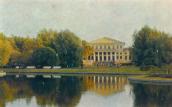
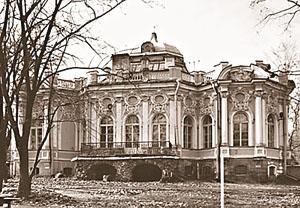
Two first areas, laid out by A.F. Vidov in 1855 for six country plots on the Separated Park territory, were granted by Emperor Alexander II for building Princess Z.I. Yusupova’s villa
|
|
|
Source: Tsarskoe Selo
|
|
hidden
|
Zabolotsky N.A. (1903-1958), poet
ZABOLOTSKY Nikolay Alexeevich (1903-1958), poet, translator. In Petrograd from 1921. Graduated from Faculty of Social Economy (Department of Language and Literature) of the Herzen Leningrad State Pedagogic Institute (1925)
|
|
|
|
|
hidden
|
Zagorodny Avenue
ZAGORODNY AVENUE, running from Vladimirskaya Square to Moskovsky Avenue. The avenue was laid in the 1740s according to a project planned by the Commission for the Building of St
|
|
|
|
|
hidden
|
Zakharov A.D. (1761-1811), architect.
ZAKHAROV Andreyan (Adrian) Dmitrievich (1761 - 1811, St. Petersburg), architect, representative of Neoclassicism. In 1767-82, he studied at the Academy of Fine Arts under the supervision of Y.M. Felten and A.A
|
|
|
|
|
hidden
|
Zakharyevskaya Street
ZAKHARYEVSKAYA STREET, running from Liteiny Avenue to Potemkinskaya Street. The street was laid in the first third of the 18th century, in the area surrounding Liteiny Yard
|
|
|
|
|
hidden
|
Zakharyina N.M., (1927-1995), architect.
ZAKHARYINA Natalia Mikhailovna (1927, Leningrad - 1995, St. Petersburg), architect, artist. She graduated from the Academy of Fine Arts (1949). Among her projects of the 1960s were the music school on Moiseenko Street
|
|
|
|
|
hidden
|
Zamyatin E.I. (1884-1937), writer
ZAMYATIN Evgeny Ivanovich (1884-1937) prose writer, playwright, literary critic. In 1902 entered the Ship-Building Faculty of the Polytechnical Institute; his studies were interrupted by an arrest and exile for revolutionary activities
|
|
|
|
|
hidden
|
Zanevsky Avenue
ZANEVSKY AVENUE, located on the right bank of the Neva River, extends from Malookhtinsky Avenue to Soedinitelnaya Railway Line, running through Malaya Okhta and Yablonevka
|
|
|
|
|
hidden
|
Zarkhi A.G., (1908-1997), film director
ZARKHI Alexander Grigoryevich (1908, St. Petersburg - 1997), film director, script writer, People’s Artist of the USSR (1969), Hero of Socialist Labour (1978). After graduating from the Leningrad School of Screen Arts he worked at Lenfilms in
|
|
|
|
|
hidden
|
Zarudny A.S. (1863-1934), lawyer, public and political figure
ZARUDNY Alexander Sergeevich (1863, St. Petersburg - 1934, Leningrad), public and political figure, lawyer. After graduating from the St. Petersburg Jurisprudence College in 1885, he worked at the St
|
|
|
|
|
hidden
|
Zastavy (Outposts) (entry)
ZASTAVY (OUTPOSTS), checkpoints, established in the early 18th century on the main roads at the entrance to St. Petersburg to check goods, luggage and to register people, leaving or entering the city
|
|
|
|
|
hidden
|
Zasulich V. I. (1849-1919) revolutionary
ZASULICH Vera Ivanovna (1849-1919, Petrograd), a revolutionary, literary critic, and publicist. Educated in a women’s boarding school in Moscow, she came to St. Petersburg in 1868 to join revolutionary circles
|
|
|
|
|
hidden
|
Zavety (Behests), journal, 1912-1914
ZAVETY (Behests), a monthly literary and political journal, published from April 1912 to August 1914 (with a total of 28 issues released). It was founded on the initiative of the Social-Revolutionary Party leader V. М
|
|
|
|
|
hidden
|
Zayachy Island
ZAYACHY ISLAND situated in the broadest part of the Neva. In the north, it is separated from Petrogradsky Island with Kronverksky Strait. The island is 28 hectares in area, 900 metres long, and 500 metres wide
|
|
|
|
|
hidden
|
Zaykov L.N. the 1st secretary of the regional party committee in 1983-85
Zaykov Lev Nikolaevich (1923-2002, St. Petersburg), statesman, Hero of Socialist Labor (1971). In 1940, he entered Leningrad factory No. 133 as a mechanic apprentice
|
|
|
|
|
hidden
|
Zazerkalie, children's musical theatre
ZAZERKALIE (Behind the Mirror), children's musical theatre (state-owned from 1989). It was established as an independent theatre company and a part of the children's department of Lenconcert with the assistance of the Main Cultural Administration in
|
|
|
|
|