hidden
|
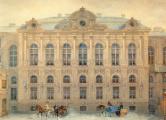
Board of Decency
BOARD OF DECENCY, the main provincial (before 1871) and city police institution. It was created in 1782 in the course of the reform of police instead of the Main Police Office
|
|
|
|
|
hidden
|
Boarding House of Education
BOARDING HOUSE OF EDUCATION, Imperial St. Petersburg, charitable establishment. Founded in 1770 on the initiative and plans of I.I. Betskoy to take care of illegitimate children, orphans and children of the poor
|
|
|
|
|
hidden
|
Boarding Schools (entry)
BOARDING SCHOOLS, fee-paying residential schools. State boarding schools were attached to gymnasiums and progymnasiums. Charges were divided into full boarders and half boarders, the latter group was provided with boarding only
|
|
|
|
|
hidden
|
Bobrinsky A. A. (1852-1927), public figure
BOBRINSKY Alexey Alexandrovich (1852, St. Petersburg 1927) Count, statesman and public figure, major land-owner, businessman, archaeologist, historian, senator (1896), Arch-Hoffmeister (1916). He was a son of Count Alexander A. Bobrinsky
|
|
|
|
|
hidden
|
Bobrinsky A.A. (1800-1868), civilian Governor
BOBRINSKY Alexander Alexeevich (1823, St. Petersburg 1903, St. Petersburg), Count, statesman, genealogist, Secret Counselor (1870), Chief Hoffmeister (1890). He was a great-grandson of Empress Catherine II, father of Count Alexei A. Bobrinsky
|
|
|
|
|
hidden
|
Bogatyrsky Avenue
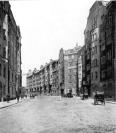
BOGATYRSKY AVENUE, a part of the central ring road lying between Kolomyazhsky Avenue and Kamyshovaya Street. The name of Bogatyrsky Avenue and the neighbouring streets is associated with the history of national aviation - the first multi-engine
|
|
|
|
|
hidden
|
Bogdanov A.I., (the 1690s-1766), Bibliognost, Historian.
BOGDANOV Andrey Ivanovich (the 1690s - 1766, St. Petersburg), first Russian bibliognost, historian of St. Petersburg, linguist. Worked as a master at the Gunpowder Factory in St. Petersburg from the 1710s, and as a printer at the St
|
|
|
|
|
hidden
|
Bogdanova-Chesnokova G.V. (1904-1983), singer
BOGDANOVA-CHESNOKOVA Glikeria Vasilievna (1904, St. Petersburg - 1983, Leningrad), musical comedy actress, People's Artist of the Russian Soviet Federative Socialist Republic (1970). Made her debut in 1920 at the Alexandrinsky Theatre as Lucile in J
|
|
|
|
|
hidden
|
Bogdanovsky E. I., (1833-1888), surgeon
BOGDANOVSKY Evstafy Ivanovich (1833-1888, St. Petersburg), surgeon. He graduated from the Medical Surgical Academy (1858). Bogdanovsky was a Doctor of Medicine and Surgery (1861), trained in the clinics of Germany, Austria, France
|
|
|
|
|
hidden
|
Bogoslovskoe Cemetery
BOGOSLOVSKOE CEMETERY (2 Laboratornaya Street) is situated in the north-east of the city, between Mechnikov Avenue and Finlyandskaya Railway Line. Today, its area consists of about 40 hectares
|
|
|
|
|
hidden
|
Bogusz-Siestrzencewicz Stanislav (1731-1826) - Catholic metropolitan
BOGUSZ-SIESTRZENCEWICZ Stanislav (1731-1826, St. Petersburg), Metropolitan of all Catholic churches of the Russian Empire (1798), honorary member of the St. Petersburg Academy of Sciences (1814)
|
|
|
|
|
hidden
|
Boklevsky K.P., (1862-1928), Ship Building Engineer
BOKLEVSKY, Konstantin Petrovich (1862-1928) was a shipbuilding engineer and Major-General of the College of Naval Architects (1914). He graduated from the Technical College of the Naval Department (1884) and from Nikolaevskaya Naval Academy (1888)
|
|
|
|
|
hidden
|
Bolotnaya Street
BOLOTNAYA STREET, translated as Swamp Street, between Toreza Avenue and Novorossiiskaya Street. It appeared in swampy area (hence the name) in the early-to-mid 19th century
|
|
|
|
|
hidden
|
Bolotov V.V. (1854-1900), theologian
BOLOTOV Vasily Vasilievich (1854-1900, St. Petersburg), theologian, church historian, Doctor of Theology (honoris causa, 1896), associate of St. Petersburg Academy of Sciences (1893). After graduating from St
|
|
|
|
|
hidden
|
Bolshaya Konyushennaya Street
BOLSHAYA KONYUSHENNAYA STREET (in 1918,-91 Zhelyabova Street, in memory of А. I. Zhelyabov), located between Konyushennaya Square and Nevsky Prospect. It was laid out in the early 1730s from the Court Stable (in Russian, Konyushenny) Yard buildings
|
|
|
|
|
hidden
|
Bolshaya Neva
BOLSHAYA NEVA, the largest left branch of the the Neva river delta; a continuation of the Neva River below the Dvortsovaya Bridge. The Bolshaya Neva flows into the Neva Bay of the Gulf of Finland, in the area surrounded by Vasilievsky Island
|
|
|
|
|
hidden
|
Bolshaya Nevka
BOLSHAYA NEVKA, the extreme right branch of the Neva River delta, which flows off the main channel 500 metres below the Liteiny Bridge. It separates Vyborgskaya Side from Petrogradskaya Side and flows into the Neva Bay below the Spit of Elagin
|
|
|
|
|
hidden
|
Bolshaya Okhta, locality
BOLSHAYA OKHTA, a locality in the east of St. Petersburg, on the right bank of the Neva River, surrounded by the Okhta River, Energetikov Avenue and Revolyutsii Freeway
|
|
|
|
|
hidden
|
Bolshaya Zelenina Street
BOLSHAYA ZELENINA STREET, running from Maly Avenue of Petrogradskaya Side to Admirala Lazareva Embankment. The street was laid in the 1710s as a road leading from the St
|
|
|
|
|
hidden
|
Bolsheokhtinsky Avenue
BOLSHEOKHTINSKY AVENUE, one of the main roads in Bolshaya Okhta lying between Krasnogvardeiskaya Square and Revolyutsii Freeway. It was called Bolshoy Okhtensky Avenue from the 1820s and Bolshe-Okhtensky Avenue from the 1880s to 1956
|
|
|
|
|
hidden
|
Bolsheokhtinsky Bridge
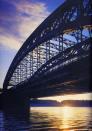
BOLSHEOKHTINSKY BRIDGE (Okhtinsky, in 1911-18 Bridge of Emperor Peter the Great), across the Neva River, joins Tulskaya and Yakornaya streets. Built in 1908-11 (engineers G.G. Krivoshein, S.P. Bobrovsky, G.P. Peredery, architect V.P
|
|
|
|
|
hidden
|
Bolshevikov Avenue
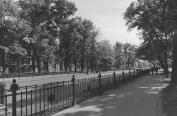
BOLSHEVIKOV AVENUE, a part of the central ring road lying between Kollontay Street and Oktyabrskaya Embankment. It was laid in the right-bank part of Nevsky District where names of streets are associated with the history of the revolutionary
|
|
|
|
|
hidden
|
Bolshoy Avenue of Petrogradskaya Side
BOLSHOY AVENUE OF PETROGRADSKAYA SIDE, in the 18th century - Bolshaya Road, Bolshaya Garnizonnaya Road, Bolshaya Ofitserskaya Street, in 1919-44 - K. Libknekhta Avenue. It lies between Dobrolyubova Avenue and Karpovka River Embankment
|
|
|
|
|
hidden
|
Bolshoy Avenue of Vasilievsky Island
BOLSHOY AVENUE OF VASILIEVSKY ISLAND, in 1720s-1780s - Bolshaya Prospektivaya or Bolshaya Pershpektivaya Street, in 1918-22 - F. Adlera Avenue, in 1922-44 - Proletarskoy Pobedy Avenue
|
|
|
|
|
hidden
|
Bolshoy Dom
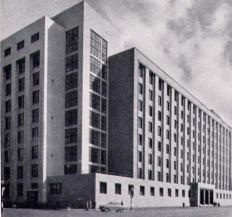
BOLSHOY DOM (Big House)(4 Liteiny Avenue), the name Leningraders gave to the administrative building where the bodies of Joint State Political Administration Board (OGPU), People's Commissariat of Home Affairs
|
|
|
|
|
hidden
|
Bolshoy Gostiny Dvor
BOLSHOY GOSTINY DVOR (35 Nevsky Prospect), the largest commercial enterprise of St. Petersburg. The first plan for a Gostiny Dvor (effectively, a large scale trading market) on Nevsky Prospect was developed in the late 1750s by the architect A
|
|
|
|
|
hidden
|
Bombings of 1941-44
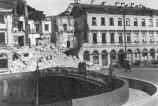
BOMBINGS OF 1941-44. Raids by the German Luftwaffe against Leningrad, meant to destroy industrial, military and civilian targets during the Siege of 1941-44. The first air raid on the city occurred on 23 June 1941; in the period from 6 September
|
|
|
|
|
hidden
|
Bonch-Bruevich M.A., (1888-1940), radio technician
BONCH-BRUEVICH Mikhail Alexandrovich (1888-1940, Leningrad), radio technician, Corresponding Member of the Academy of Sciences of the USSR (1931). Graduated from the Nikolaevsky Engineering School (1909) and the Military Electrotechnical School in
|
|
|
|
|
hidden
|
Bonstedt L.L. (1822-1885), architect
BONSTEDT Lyubim Lyubimovich (Ludvig) (1822, St. Petersburg - 1885), architect, academy member (1846), professor of the Academy of Fine Arts (1858), court counsellor. He was a subject of the Kingdom of Bavaria
|
|
|
|
|
hidden
|
Book Trade (entry)
BOOK TRADE. State, institutional and private book trading has been carried out in St. Petersburg since the first years of its existence. The first official bookshop belonged to the St
|
|
|
|
|