Persons
/
Bogachev Gennady Petrovich
hidden
|
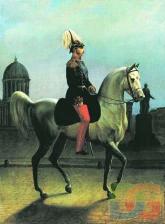
Alexander II , Emperor (1818-1881)
ALEXANDER II (1818-1881, St. Petersburg), Emperor (since 1855). He was a son of Emperor Nicholas I and Empress Alexandra Fedorovna. Tsarevitch (from 1831), General of Infantry (1847), Honorary Member of the Petersburg Academy of Sciences (1826)
|
|
|
|
|
hidden
|
Alexander III, Emperor (1845-1894)
ALEXANDER III (1845, St. Petersburg — 1894), Emperor (since 1881). Second son of Emperor Alexander II and Empress Maria Alexandrovna. From 1865, he was heir to the throne and Tsarevitch. He married the Dutch princess, Dagmar (see Maria Fedorovna)
|
|
|
|
|
hidden
|
Alexandra Fedorovna, Empress (1798-1860)
ALEXANDRA FEDOROVNA (1798-1860, Tsarskoe Selo), Empress (from 1825). Nee the Prussian Princess Frederika Louise Charlotte Wilhelmina. Wife (from 1817) of Emperor Nicholas I and mother of Emperor Alexander II
|
|
|
|
|
hidden
|
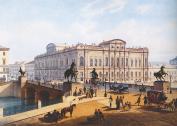
Anichkov Bridge
ANICHKOV BRIDGE (in 1739 Nevsky), spanning the Fontanka River on Nevsky Prospect. The first wooden bridge was built here in 1715 under the supervision of М.О. Anichkov (hence the name), in 1721 it was elevated (the master K
|
|
|
|
|
hidden
|
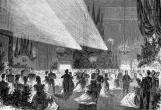
Balls
BALLS, evening parties with dances, one of the entertainments of high society in St. Petersburg from the 18th - the early 20th centuries. Balls originated from assemblies, where, according to Tsar Peter the Great's order, minuet, allemande, courante
|
|
|
|
|
hidden
|
Buff, theatre
BUFF, the name of several Petersburg musical theatres (from the Italian: opera buffa is comic opera). The first Theatre-Buff was opened in the garden of the Anichkov Palace (today known as the Recreation Garden) on Nevsky Prospect in 1872
|
|
|
|
|
hidden
|
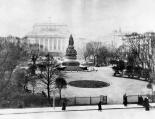
Catherine Square
CATHERINE SQUARE is situated in the centre of St. Petersburg on Nevsky Prospect. It is surrounded by the architecture ensemble of the Anichkov Palace, Alexandrinsky Theatre, and Russian National Library. The park was laid out in 1820-32 (architect K
|
|
|
|
|
hidden
|
Church of Our Lady of Vladimir
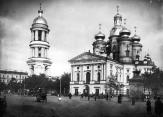
CHURCH OF OUR LADY OF VLADIMIR, located at 20 Vladimirsky Avenue. An architectural monument in a transition style merging Baroque with Classicism. The church was constructed on a trade square in 1761-69, presumably to the project of architect P. A
|
|
|
|
|
hidden
|
City Museum
CITY MUSEUM, founded in 1918 based on an earlier museum established in 1908 and situated at 55 Sadovaya Street. The City Museum was accommodated in the Anichkov Palace with the Museum of Old Petersburg as its branch located at 35 Fontanka River
|
|
|
|
|
hidden
|
Concert Halls (entry)
CONCERT HALLS appeared in St. Petersburg in the late 18th century. Earlier, musicians arranged paid concerts in palaces of grandees, theatres, and taverns. The first documented series of public concerts refers to the concerts given by G
|
|
|
|
|
hidden
|
Elizaveta (Elizabeth) Petrovna (1709-1761), Empress
ELIZAVETA (Elizabeth) PETROVNA (1709-1761, St. Petersburg), Empress (since 1741), daughter of Peter the Great and Elizaveta I. Before taking the throne, she lived in a palace at the Tsaritsyn Medow in St
|
|
|
|
|
hidden
|
Fountains (entry)
FOUNTAINS. The first fountains in St. Petersburg were laid out at the beginning of the 18th century in the Summer Garden. In 1717, the first engine was ordered (engineer Desaguliers) for their water supply and in 1717-1721 Ligovsky Canal was dug
|
|
|
|
|
hidden
|
Gegello A.I. (1891-1965), architect.
GEGELLO Alexander Ivanovich (1891-1965), architect. Resided in St. Petersburg since 1910. Graduated from the College of Civil Engineers (1920) and from the Academy of Fine Arts, Higher School of Art and Technology (1923)
|
|
|
|
|
hidden
|
Grilles (entry)
GRILLES. St. Petersburg boasts a number of unique metal grilles, created in the course of three centuries. Wrought grilles of bars with (sometimes gilded) decorative figures made from flat iron bars (the grille of the Ekaterininsky (Catherine)
|
|
|
|
|
hidden
|
His Imperial Majesty's Cabinet
HIS IMPERIAL MAJESTY'S CABINET, central state institution. Created in 1704 as Tsar Peter the Great's private cabinet, conducting the personal correspondence of Russian Emperors, managing their personal finances and property
|
|
|
|
|
hidden
|
Imperial Residences
IMPERIAL RESIDENCES, palaces, the official abodes of the Emperors, the Imperial Court, recognized by law as such; property of the Treasury and maintained at the expense of the State Treasury House. The place of court ceremonies
|
|
|
|
|
hidden
|
Maria Fedorovna (1847-1928), the Empress
MARIA FEDOROVNA (1847-1928), Empress (since 1881). Nee Marie Sophie Frederikke Dagmar, Princess of Denmark. Wife of Emperor Alexander III (from 1866); originally engaged to his elder brother, Tsesarevitch Nicholas Alexandrovich (1843-1865)
|
|
|
|
|
hidden
|
Masonic Lodges
MASONIC LODGES, associations (meetings) of the followers of the religious-ethical doctrine (masonry), urging people to unite on the principles of equality, mutual aid and fraternal love
|
|
|
|
|
hidden
|
Masquerades
MASQUERADES, masquerade balls. A sort of a carnival where people wear masks. In Russia masquerades were put into practice by Tsar Peter the Great in the early 18th century (the larks of Drunkumenical Council
|
|
|
|
|
hidden
|
Messmacher M. E. (1842-1906), architect
MESSMACHER Maximilian Egorovich (1842, St. Petersburg 1906), architect, associate academy member of architecture (1872). Graduated from Peterschule, the School of Painting of the St. Petersburg Society of Artists, in 1867 - the Academy of Fine Arts
|
|
|
|
|
hidden
|
Monighetti I.A. (1819-1878), architect
MONIGHETTI Ippolit Antonovich (1819-1878, St. Petersburg), architect, aquarellist, teacher, associate academy member (1847), professor (1858), court architect (1860)
|
|
|
|
|
hidden
|
Nappelbaum M.S.(1869-1958), photographer
NAPPELBAUM Misey Solomonovich (1869-1958), photographer. He lived in St. Petersburg from 1910 and created the gallery of the city's public figures: Yury Annenkov, Anna Akhmatova, Alexander Block, Alexander Glazunov, Vsevolod Meyerkhold
|
|
|
|
|
hidden
|
Nevsky Prospect
NEVSKY PROSPECT known as Bolshaya Pershpektivnaya Road or Bolshaya Pershpektiva until 1738, Nevskaya Prospektivaya Street or Nevskaya Perspektiva in 1738-1780s, and 25 October Avenue in 1918-44 so named in memory of the October Revolution of 1917
|
|
|
|
|
hidden
|
Nicholas I, Emperor (1796-1855)
NICHOLAS I (1796, Tsarskoe Selo - 1855, St. Petersburg), Emperor (from 1825). Emperor Pavel I and Empress Maria Fedorovna's third son. Married the Princess of Prussia (1817), who took the name of Alexandra Fedorovna
|
|
|
|
|
hidden
|
Nicholas II, the Emperor (1868-1918)
Nicholas II (1868, Tsarskoe Selo - 1918), Emperor from 1894 to 1917. Son of Emperor Alexander III and Empress Maria Fedorovna. Married Princess of Hesse-Darmstadt, who took the name of Alexandra Fedorovna
|
|
|
|
|
hidden
|
Ostrovskogo Square
OSTROVSKOGO SQUARE known as Alexandrinskaya Square before 1923, between Nevsky Prospect and Zodchego Rossi Street. It was renamed after playwright A. N. Ostrovsky (1823-86). The square was designed by architect K. I
|
|
|
|
|
hidden
|
Palace for Young Creativity
PALACE FOR YOUNG CREATIVITY (until 1990 - Leningrad City Pioneer Palace, to 1991 - Leningrad City Palace of Youth Creativity) (39 Nevsky Prospect), opened on 12.2
|
|
|
|
|
hidden
|
Patersen Benjamin, (1750-1810), Artist
PATERSEN Benjamin (1750-1810, St. Petersburg) Swedish artist, water colour painter and engraver. He received his artistic education in Goteborg. He lived in St. Petersburg from 1786
|
|
|
|
|
hidden
|
Plotnikov, М. М. (1901-1992), architect-restorer
PLOTNIKOV Mikhail Mikhailovich (1901, St. Petersburg 1992, Leningrad), architect-restorer. Graduated from the Academy of Arts (1943). Architect of the special research and production association Restavrator (Restorer)
|
|
|
|
|
hidden
|
Rachau K.K., (1830-1880), architect
RACHAU Karl Karlovich (1830 - 1880, St. Petersburg), architect, one of the prominent representatives of St. Petersburg Eclectism, master of interiors, accentuating small forms and an architectural scholar
|
|
|
|
|