The subject index
/
Empress Maria's Department of Institutions
hidden
|
Alms-houses (entry)
ALMS-HOUSES, boarding institutions for poor, ill and aged people. The first alms-houses set up in St. Petersburg were attached to churches, the first ones being theHoly Ascension Church in Shpalernaya Street (1713) and St
|
|
|
|
|
hidden
|
Boarding House of Education
BOARDING HOUSE OF EDUCATION, Imperial St. Petersburg, charitable establishment. Founded in 1770 on the initiative and plans of I.I. Betskoy to take care of illegitimate children, orphans and children of the poor
|
|
|
|
|
hidden
|
Bobrinsky A. A. (1852-1927), public figure
BOBRINSKY Alexey Alexandrovich (1852, St. Petersburg 1927) Count, statesman and public figure, major land-owner, businessman, archaeologist, historian, senator (1896), Arch-Hoffmeister (1916). He was a son of Count Alexander A. Bobrinsky
|
|
|
|
|
hidden
|
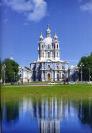
Cathedral of the Renewal of the Jerusalem Holy Resurrection Temple
CATHEDRAL OF THE RENEWAL OF THE JERUSALEM HOLY RESURRECTION TEMPLE, Smolny Сathedral, the Cathedral For All Educational Establishments, located at 1 Rastrelli Square. Monument of Baroque architecture
|
|
|
|
|
hidden
|
Charity (entry)
CHARITY, philanthropic activities, aimed at extending aid to the needy and carried out by social and church organisations, state establishments, as well as by private persons for religious, moral and humane reasons (public and private charity)
|
|
|
|
|
hidden
|
Deaf-Mute School
DEAF-MUTE SCHOOL is one of the oldest deaf-mute pedagogical schools in Russia. It was founded as an experimental institution by Empress Maria Fedorovna (who sponsored it until 1810) in Pavlovsk in 1806
|
|
|
|
|
hidden
|
Essen P.K., governor-general in 1830-42
ESSEN (v. Essen) Peter Kirillovich (1772-1844, St. Petersburg), count (1833), statesman and combat leader, infantry general (1819). In 1777 he was registered in the Guards, took part in the Russo-Swedish war of 1788-91, Swiss campaign of 1799-1800
|
|
|
|
|
hidden
|
Golenischev-Kutuzov P.V., Governor General 1825-30
GOLENISCHEV-KUTUZOV Pavel Vasilievich (1772-1843, St. Petersburg), Count (1832), statesman and military figure, General of Cavalry (1826), Adjunct General (1810). He was brought up in the Corps of Pages, from 1794, he served in Cavalry Guards
|
|
|
|
|
hidden
|
Kavalergardskaya Street
KAVALERGARDSKAYA STREET, running from Suvorovsky Avenue to Tavrichesky Lane. Known as Krasnoy Konnitsy Street from 1923 to 1991. In the early 19th century, the corner of Shpalernaya Street and Kavalergardskaya Street was built up with the Cavalry
|
|
|
|
|
hidden
|
Lyceum
LYCEUM, Tsarskoe Selo Lyceum renamed Alexandrovsky Lyceum in 1843, a privileged higher education institution providing training for state officials. It was founded in 1810 and opened on 19 October 1811
|
|
|
|
|
hidden
|
Maria Alexandrovna (1824-1880), Empress
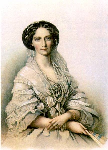
MARIA ALEXANDROVNA (1824-1880, St. Petersburg), Empress (from 1856). Nee Maximiliane Wilhelmine Auguste Sophie, Princess of Hesse-Darmstadt. Emperor Alexander II's wife (from 1841)
|
|
|
|
|
hidden
|
Maria Fedorovna (1847-1928), the Empress
MARIA FEDOROVNA (1847-1928), Empress (since 1881). Nee Marie Sophie Frederikke Dagmar, Princess of Denmark. Wife of Emperor Alexander III (from 1866); originally engaged to his elder brother, Tsesarevitch Nicholas Alexandrovich (1843-1865)
|
|
|
|
|
hidden
|
Maria Fedorovna, (1759-1828), Empress
MARIA FEDOROVNA (1759-1828, St. Petersburg), Empress (from 1796). Nee Sophie Dorothea Auguste Louise, Princess of Wurttemberg. She was Emperor Pavel I's second wife (from 1776)
|
|
|
|
|
hidden
|
Nikolaevskaya Children’s Hospital
NIKOLAEVSKAYA CHILDREN’S HOSPITAL (13 Chapygina Street) was the first children’s hospital in Russia. It was opened in 1834 with the aid of private donations on Ekaterininsky Canal near the Alarchin Bridge; in 1842 it was relocated to a reconstructed
|
|
|
|
|
hidden
|
Public Education (entry)
PUBLIC EDUCATION. It was Peter the Great who laid the basis for public education in St. Petersburg placing the greatest emphasis on military and professional education with the Naval Academy founded in approximately 1715
|
|
|
|
|
hidden
|
Shulgin D.I. governor-general in 1848-54
SHULGIN Dmitry Ivanovich (1785-1854, St. Petersburg), statesman and combat leader, infantry general (1848). After graduating from the boarding school of Moscow university (1800) he served in the Guards, took part in the Russo-French wars of 1805
|
|
|
|
|
hidden
|
Suvorov A.A. governor-general in 1861-66
SUVOROV Alexander Arkadyevich (1804, St. Petersburg - 1882, at the same place), Gracious Prince, statesman and combat leader, infantry general (1859). The grandson of A.V. Suvorov. He studied at the universities of Sorbonne and Gettinghen
|
|
|
|
|
hidden
|
Trepov F.F. the Chief of the Police in 1866-78
TREPOV Fedor Fedorovich (1809-1889, St. Petersburg), statesman, cavalry general (1878), adjutant-general (1867). The father of D.F. Trepov. In 1826-27 he studied at the Central Engineering school in St. Petersburg
|
|
|
|
|
hidden
|
Widows' House
WIDOWS' HOUSE, charitable establishment for widows and their children. It was opened in 1803 on the initiative of Empress Maria Fedorovna on Vyborgskaya Side, in October 1809 it moved to the former Smolny Convent (today 1 Smolnogo Street)
|
|
|
|
|
hidden
|
Wilson A. Y. (1776-1866), engineer, manager of Izhorsky Plants
WILSON Alexander Yakovlevich (1776-1866), production manager, general engineer (1853). Native of Scotland, he and his father Yakov Wilson, a blacksmith, came to Russia in 1784
|
|
|
|
|
hidden
|
Women’s Institutes (Entry)
WOMEN’S INSTITUTES were boarding schools of intermediate education. They were under the oversight of the Department of Empress Maria's Establishments in 1796-1917
|
|
|
|
|
hidden
|
Women’s Pedagogical Institute
WOMEN’S Pedagogical Institute was an institution of higher education of the Department of Institutions of Empress Maria. It was established in 1903 on the basis of the Pedagogical Courses of the St. Petersburg Girls’ Gymnasia
|
|
|
|
|