The subject index
/
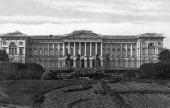
Mikhailovsky Palace
hidden
|
Chancellery, His Imperial Majesty's Personal
CHANCELLERY, HIS IMPERIAL MAJESTY'S Personal, a supreme public institution. The Chancellery consisted of several divisions, which were established during the first half of the 19th century to carry out the Sovereign's personal supervision over
|
|
|
|
|
hidden
|
Demut-Malinovsky V.I., (1779-1846), sculptor
DEMUT-MALINOVSKY Vasily Ivanovich (1779 - 1846, St. Petersburg), sculptor. Studied at the Academy of Arts (1785-1800) under M.I. Kozlovsky, and received a retainer from the Academy of Arts to study in Rome (1803-06)
|
|
|
|
|
hidden
|
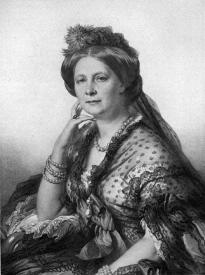
Elena Pavlovna (1806/1807-1873), Grand Princess
ELENA PAVLOVNA (nee Frederica Charlotte Maria Princess of Wurttemberg) (1806-1873, St. Petersburg), Grand Princess, wife of Grand Prince Mikhail Pavlovich (from 1823)
|
|
|
|
|
hidden
|
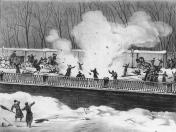
First of March, 1881
FIRST OF MARCH 1881, the day Emperor Alexander II was assassinated, prepared and accomplished by the party People's Will. The plan included exploding the Emperor's carriage on its way to the Mikhailovsky Manege
|
|
|
|
|
hidden
|
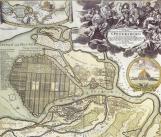
General Plans for the Development of Petersburg-Leningrad
GENERAL PLANS FOR THE DEVELOPMENT OF PETERSBURG-LENINGRAD. One the first projects of St. Petersburg planning dates back to 1709-12. According to it, the city centre should be situated at Kotlin Island and was to be connected to outer parts of the
|
|
|
|
|
hidden
|
Gornostaev A.M. (1808-1862), architect.
GORNOSTAEV Alexey Maximovich (1808-1862, St. Petersburg), architect, teacher, representative of the Neo-Russian style, member of the academy (1838), professor of the Academy of Fine Arts (from 1849), college Advisor (1859). From 1825, he lived in St
|
|
|
|
|
hidden
|
Grand Princes' Palaces and Mansions (entry)
GRAND PRINCES' PALACES AND MANSIONS, St. Petersburg buildings, specially built or acquired for members of the Imperial family - children and grandchildren of the Emperor (except for the eldest son, the successor to a throne
|
|
|
|
|
hidden
|
Grilles (entry)
GRILLES. St. Petersburg boasts a number of unique metal grilles, created in the course of three centuries. Wrought grilles of bars with (sometimes gilded) decorative figures made from flat iron bars (the grille of the Ekaterininsky (Catherine)
|
|
|
|
|
hidden
|
Inzhenernaya Street
INZHENERNAYA STREET, running from Griboedova Canal to Belinskogo Square. The street was named in 1823 after the Principal Engineering College, which was located in the Mikhaylovsky Castle
|
|
|
|
|
hidden
|
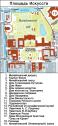
Iskusstv Square
ISKUSSTV SQUARE, situated between Inzhenernaya Street and Italyanskaya Street. Known as Mikhaylovskaya Square from 1834 to 1918, then called Lassalya Square until 1940, in memory of German socialist F. Lassal (1825-64)
|
|
|
|
|
hidden
|
Mecklenburg-Strelitz, Dukes
MECKLENBURG-STRELITZ, German ruling house, whose members lived in Russia. Georg Avgust Ernest Adolph Karl Ludwig, Grand Duke of Mecklenburg-Strelitz (1824-1876), was Artillery General (1861)
|
|
|
|
|
hidden
|
Mikhail Pavlovich, Grand Prince (1798-1849)
MIKHAIL PAVLOVICH (1798, St. Petersburg – 1849), Grand Prince, Adjutant General (1831), member of the State Council (1825), Senator (1834), Honorary Member of the Imperial Military Academy (1832)
|
|
|
|
|
hidden
|
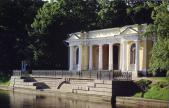
Mikhailovsky Garden
MIKHAILOVSKY GARDEN is a landscape architectural monument from the first third of the 19th century. It is a city garden with an area of 8.7 hectares confined on one side by Mikhailovsky Palace, Griboedova Canal Embankment
|
|
|
|
|
hidden
|
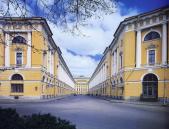
Mikhaylovskaya Street
MIKHAYLOVSKAYA STREET (known as Lassalya Street from 1918 to 1940, then called Brodskogo Street until 1991), between Nevsky Prospect and Iskusstv Square. The street, laid in 1834 after the design plan conceived by architect C.I
|
|
|
|
|
hidden
|
Miloradovich M.A. governor-general in 1818-25
MILORADOVICH Mikhail Andreevich (1771-1825, St. Petersburg), count (1813), statesman and military figure, infantry general (1809). He attended Koningsberg and Gottingen universities, studied the science of warfare in Metz and Strasbourg
|
|
|
|
|
hidden
|
Rossi C.I. (1775-1849), architect
ROSSI Carl Ivanovich (Carlo Giovanni) (1775-1849, St. Petersburg), architect. The son of the court ballerina G. Lepik. Graduated from the Peterschule in St. Petersburg, apprenticed architecture with V
|
|
|
|
|
hidden
|
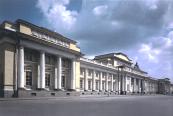
Russian Ethnographical Museum
RUSSIAN ETHNOGRAPHICAL MUSEUM, at 4а Inzhenernaya Street, was established in 1902 as the Ethnographical Department of the Russian Museum. The museum was opened in 1923. It became independent in 1934 as the State Museum of Ethnography
|
|
|
|
|
hidden
|
Russian Museum, State
RUSSIAN MUSEUM, State was founded on 13 April 1895 by the decree of Emperor Nicholas II as the Russian Museum of Emperor Alexander III with the purpose of gathering the collections of Russian art
|
|
|
|
|
hidden
|
Scotti D.B., (1776 -1830), artist
SCOTTI Giovanni Batista (Ivan Karlovich) (1776-1830, St. Petersburg), master of monumental decorative Classical painting. Studied under his father, Karl Scotti, a native of northern Italy, with whom he worked from 1786 until the 19th century
|
|
|
|
|
hidden
|
Tsentralny (Central) District
TSENTRALNY (CENTRAL) DISTRICT, an administrative-territorial entity within St. Petersburg, with the territorial administration situated at 176 Nevsky Prospect. The district was set up in 1994, when Smolninsky District
|
|
|
|
|
|
hidden
|
|
hidden
|
|
hidden
|
|
hidden
|
|
hidden
|
|
hidden
|
|
hidden
|
|
hidden
|
|
hidden
|
|
hidden
|