|
|
Rubricator
/
/
Architecture
hidden
|
Alexander Palace (Pushkin)
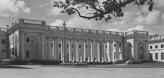
ALEXANDER PALACE (Pushkin), an architectural monument in Neoclassical style; constructed in 1792-96 (architect G. Quarenghi); located on the territory of the Alexander Park
|
|
|
|
|
hidden
|
Alexandrovsky Park (Pushkin)
ALEXANDROVSKY PARK (Pushkin), a landscape architecture monument, situated west of Ekaterininsky Park. The park is a part of Tsarskoe Selo palace and park ensemble. Alexandrovsky Park covers an area of 120 hectares
|
|
|
|
|
hidden
|
Amber Room
AMBER ROOM, a unique interior of the Great Catherine Palace, and 18th century arts and crafts monument. The walls of the Amber Room are decorated with the amber panels (the only example of amber used in Russian architecture)
|
|
|
|
|
hidden
|
Cameron C. (1745-1812), architect.
CAMERON Charles (1745-1812, St. Petersburg), architect, representative of Neoclassicism. Native of Scotland, he studied in France under the guidance of his father, later under the architect I. Uer, then in Italy. Since 1779, he worked in St
|
|
|
|
|
hidden
|
Catherine Palace (Town of Pushkin)
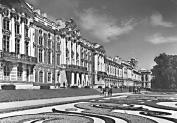
CATHERINE PALACE (Town of Pushkin), an architectural monument of the Baroque period, compositional centre and dominating architecture of the park and palace ensemble of Tsarskoe Selo
|
|
|
|
|
hidden
|
Catherine Park (Pushkin town), ensemble
CATHERINE PARK (Pushkin town), a monument of landscape architecture and the central part of Tsarskoe Selo palace ensemble. Its consists of a total of 107 hectares The park consists of a grassed and a landscape areas, divided by the Great Pond
|
|
|
|
|
hidden
|
Chevakinsky S. I. (1713-1783), architect
CHEVAKINSKY Savva Ivanovich (1713-1783), architect, representative of the Baroque. From 1729, studied at the Moscow Preparatory School of the St. Petersburg Naval Academy, in 1732-38 apprenticed in architecture with I.K
|
|
|
|
|
hidden
|
China-village (Pushkin)
CHINA-VILLAGE (PUSHKIN), an architectural monument, part of the Tsarskoe Selo Palace and Park Ensemble, divided by Podkapriznaya Road from Catherine Park. Constructed in 1782-98 (architect A. Rinaldi, C
|
|
|
|
|
hidden
|
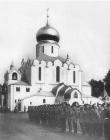
Court Cathedral of Our Lady Feodorovskaya
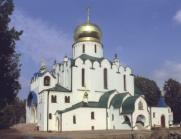
COURT CATHEDRAL OF OUR LADY FEODOROVSKAYA in Tsarskoe Selo, located at 32 Akademichesky Avenue, Pushkin, an architectural monument, attached to the unfinished complex of Feodorovsky settlement
|
|
|
|
|
hidden
|
Danini S.A. (1867-1942), architect.
DANINI Silvio Amvrosievich (1867-1942, Leningrad), architect. Descendent of an Italian family. He lived in St. Petersburg from 1886, graduating from the Academy of Fine Arts in 1892
|
|
|
|
|
hidden
|
Felten Y. M. (1730-1801), architect
FELTEN Yury Matveevich (Georg Friedrich) (1730 -1801, St. Petersburg), architect, professor of the Academy of Fine Arts (from 1775; from 1785 a Council member, in 1789-94 director), State Counsellor (1784)
|
|
|
|
|
hidden
|
Feodorovsky Settlement (Pushkin Town)
FEODOROVSKY SETTLEMENT, an architectural ensemble of the town of Pushkin, to the north-west from the Alexandrovsky Park. It was constructed in the Neo-Russian style on the initiative of Emperor Nicholas II and encompasses the Court Cathedral of Our
|
|
|
|
|
hidden
|
Gogen von A.I. (1856-1914), architect.
GOGEN Alexander Ivanovich von (1856-1914, Petrograd), architect, member of the Academy of Architcture (1895). He graduated from the Academy of Fine Arts (1883). Among his early works, there are mansions of N.K
|
|
|
|
|
hidden
|
Gornostaev A.M. (1808-1862), architect.
GORNOSTAEV Alexey Maximovich (1808-1862, St. Petersburg), architect, teacher, representative of the Neo-Russian style, member of the academy (1838), professor of the Academy of Fine Arts (from 1849), college Advisor (1859). From 1825, he lived in St
|
|
|
|
|
hidden
|
Grimm D.I., Grimm G.D., Grimm G.G., architects
GRIMMS, a dynasty of architects, theorists, art historians and teachers. David Ivanovich Grimm (1823, St. Petersburg - 1898), architect, representative of Eclecticism, master of the Russo-Byzantine style, historian of Caucasian Architecture
|
|
|
|
|
hidden
|
Hastie V.I. (1753-1832), architect.
Hastie Vasily Ivanovich (William) (1753-1832), architect. Native of Switzerland, in 1784 he came to Russia by invitation of C. Cameron, settling in Tsarskoye Selo on Angliiskaya Street
|
|
|
|
|
hidden
|
Kazanskoe Cemetery
KAZANSKOE CEMETERY. Cemetery in the town of Pushkin (1 Gusarskaya Street). The area consists of 35 hectares. It has existed from 1785. It is named after the Kazan Church and Burial Vault (1785-1790), built over the crypt of A.D
|
|
|
|
|
hidden
|
Krichinsky S. S., (1874-1923), architect
KRICHINSKY Stepan Samoilovich (1874-1923), architect. After graduating from the Civil Engineers' Institute in 1897, he held a post in the Central Directorate for Irregular Duties
|
|
|
|
|
hidden
|
Kvasov A.V., architect
KVASOV Andrey Vasilyevich (circa 1718, St. Petersburg - after 1777), architect, master of Baroque. Brother of Alexey V. Kvasov. He studied at the Construction Office under the guidance of architect M.G. Zemtsov
|
|
|
|
|
hidden
|
Lansere N.E. (1879-1942), architect
LANSERE Nikolay Evgenyevich (1879, St. Petersburg -1942), architect and graphic artist, architectural historian and teacher. He was the brother of E.E. Lansere and Z.E. Serebryakova
|
|
|
|
|
hidden
|
Levinson E.A. (1894-1968), architect
LEVINSON Evgeny Adolfovich (1894-1968, Leningrad), architect and artist, Associate of the Academy of Architecture of the USSR (from 1941), Doctor of Architecture (1946)
|
|
|
|
|
hidden
|
Menelas A.A. (1753-1834), architect
MENELAS Adam Adamovich (1753-1831, Tsarskoe Selo), architect, landscape designer, representative of the late Neoclassicism. Native of Scotland. From 1785, resided in Russia, worked as a mason in the workshop of N.A. Lvov in Torzhok and Mogilev
|
|
|
|
|
hidden
|
Monighetti I.A. (1819-1878), architect
MONIGHETTI Ippolit Antonovich (1819-1878, St. Petersburg), architect, aquarellist, teacher, associate academy member (1847), professor (1858), court architect (1860)
|
|
|
|
|
hidden
|
Pokrovsky V.A. (1871-1931), architect
POKROVSKY Vladimir Alexandrovich (1871-1931, Leningrad), an architect, master of the early 20th century neo-Russian style. Graduated from the Academy of Arts (1898; Academician of Architecture since 1907
|
|
|
|
|
hidden
|
Quarenghi G. (1744-1817), architect
QUARENGHI Giacomo (1744-1817), architect, representative of Neoclassicism. Native of Italy. From 1761 (according to the other data sources, from 1763) studied painting and architecture in Rome. At the end of 1779, he came to St
|
|
|
|
|
hidden
|
Rastrelli F.B., (1700-1771), architect
RASTRELLI, Francesco de (Varfolomey Varfolomeevich) (1700-1771), architect, designer (decorative artist) and graphic artist, one of the most prominent architects of the Baroque epoch. The son of B.Rastrelli. In 1716-25, he worked in St
|
|
|
|
|
hidden
|
Rinaldi А. (1709-1794), architect
RINALDI Antonio (around 1709-1794), architect of Italian descent. Studied in Naples under L. Vanvitelli. From 1752 served under Hetman K.G. Razumovsky in Malorussia (Little Russia, otherwise known as Ukraine). Since 1754 resided in St
|
|
|
|
|
hidden
|
Shishko L. P. (1872-1943), architect
SHISHKO Lev Petrovich (1872-1943, Lakhta settlement, by Leningrad), architect, teacher. Graduated from the Institute of Civil Engineering (1896). In the 1900s, was appointed architect to the Alexander Nevsky Lavra, built the New Vestry, a hotel
|
|
|
|
|
hidden
|
Shustov, Smaragd Loginovich (1789-1870), an architect
Smaragd Loginovich Shustov (1789 – 1870, СПб.), an architect. Shustov graduated from the Academy of Arts (1810). Shustov worked as an assistant of an architect of the office of the St Petersburg Military General Governor
|
|
|
|
|
hidden
|
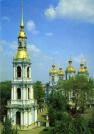
St. Catherine’s Cathedral in Tsarskoe Selo
ST. CATHERINE’S CATHEDRAL IN TSARSKOE SELO designed in Russian-Byzantine style by architect K. A. Ton, constructed on Sobornaya Square in 1835-40. In 1851-52, the side-altars were consecrated. The cathedral could hold 2,000 people
|
|
|
|
|
|