hidden
|
Speedway
SPEEDWAY (71 Moris Thorez Avenue; 67 Jaques Duclos Street), an industrial sports facility, opened in 1964. The sporting part consists of a 400-meter cinder track, and a 64 x104m field for paintball. The seating capacity is 10,000
|
|
|
|
|
hidden
|
Speransky M.M. (1772-1839), statesman
SPERANSKY Mikhail Mikhailovich (1772-1839, St Petersburg), Count (1839), statesman, Actual Privy Counsellor (1827), Honorary Member of the Petersburg Academy of Sciences (1819), full member of the Russian Academy (1831)
|
|
|
|
|
hidden
|
Speransky S.B. (1914-1983), architect.
SPERANSKY Sergey Borisovich (1914-1983, Leningrad), architect, people's architect of the USSR (1971), full member of the Academy of Arts of the USSR (1979). He graduated from the Academy of Arts (1941), where he later lectured (from 1947)
|
|
|
|
|
hidden
|
Speshnev N. A. (1821-1882), revolutionary
SPESHNEV Nikolay Alexandrovich (1821-1882, St. Petersburg) was a member of the circle headed by Petrashevsky. In 1836, he entered the Lyceum in Tsarskoe Selo. In 1839, he entered the Faculty of Eastern Languages of St. Petersburg University
|
|
|
|
|
hidden
|
Spesivtseva O.A. (1895-1991), ballet dancer
SPESIVTSEVA Olga Alexandrovna (1895-1991), ballet dancer. After graduating from the St. Petersburg Theatre School where she studied under K.M. Kulichevskaya, Spesivtseva worked at the Mariinsky Theatre from 1913 to 1924. She was the lead dancer in M
|
|
|
|
|
hidden
|
Sphinxes
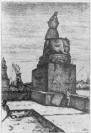
SPHINXES. Mythical creatures with the body of lion and a human head. In the second half of the 18th century, marble sphinxes were installed in the Private Garden in Gatchina and at the Osinovaya Roscha estate
|
|
|
|
|
hidden
|
Spiridonov I.V. the 1st secretary of the regional party committee in 1957-62
SPIRIDONOV Ivan Vasilievich (1905-1991), Soviet statesman and party worker. Since 1928 a member of All-Union Communist Party (bolshevist). In 1925-39 he was a worker at Leningrad plants
|
|
|
|
|
hidden
|
Spit of Vasilievsky Island
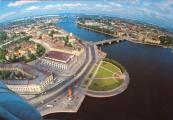
SPIT OF VASILIEVSKY ISLAND, a cape in the eastern part of Vasilievsky Island, washed by the Bolshaya Neva and Malaya Neva rivers, the highest part of the island and one of the main architectural ensembles of St. Petersburg. Built to architect D
|
|
|
|
|
hidden
|
Sport Palaces (entry)
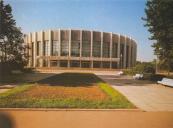
SPORT PALACES. Sheltered structures where sport competitions and large-scale events are held. In St. Petersburg, almost all sport palaces are have universal functions, with a temporary arena that can be transformed, for example
|
|
|
|
|
hidden
|
Sports and Recreation Facilities (entry)
SPORTS AND RECREATION FACILITIES, buildings for various sports, belonging to sports clubs, enterprises, establishments, etc. Among them are ranked: the Petersburg Sports and Concert Complex, the Ice Palace, the Palaces of Sport, stadiums
|
|
|
|
|
hidden
|
Sports Schools
SPORTS SCHOOLS for Children and Youth, training high-level sportsmen. First opened in Leningrad in the middle of the 1950s. The Specialized Sports Schools for Olympic Reserves were formed in the 1960s for the purpose of training sportsmen of the
|
|
|
|
|
hidden
|
Srednaya Nevka
SREDNYAYA NEVKA, branch in the Neva river delta. It comes off the Bolshaya Nevka between Elagin Island and Kamenny Island, separating them from each other and from Krestovsky Island as well
|
|
|
|
|
hidden
|
Sredny Avenue of Vasilievsky Island
SREDNY AVENUE OF VASILIEVSKY ISLAND (called Malaya Pershpektiva from the 1730s until the 1770s, known as Mussorgskogo Avenue in 1939-44), from Makarova Embankment to Nalichnaya Street
|
|
|
|
|
hidden
|
Srednyaya Rogatka
SREDNYAYA ROGATKA, the historical name of the area where Pulkovskoe Freeway and Moskovskoe Freeway intersect. In the 18th-19th centuries, an outpost was located there and the road was blocked with rogatka (turnpike) at night (hence the name)
|
|
|
|
|
hidden
|
Sreznevsky I.I., (1812-1880), philologist
SREZNEVSKY Izmail Ivanovich (1812-1880, St. Petersburg), philologist, slavicist, member of the St. Petersburg Academy of Sciences (1849). He graduated from the Philosophical Faculty of the University of Kharkov in 1829. In 1847, he came to St
|
|
|
|
|
hidden
|
SS. Boris & Gleb’s Church
SS. BORIS & GLEB’S CHURCH, Church of Holy Martyrs and Passion-Bearers Boris and Gleb, located at Sinopskaya Embankment, on Bakunina Avenue. Commissioned by St. Petersburg bread merchants of the Kalashnikovskaya Exchange to commemorate the
|
|
|
|
|
hidden
|
SS. Peter and Paul Cathedral
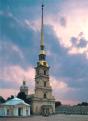
SS. PETER AND PAUL CATHEDRAL (Cathedral of the Apostles Peter and Paul), an architectural monument in the style of the Petrine Baroque. The cathedral was constructed in 1712-33 (by architect D
|
|
|
|
|
hidden
|
SS. Peter and Paul Cathedral in Peterhof
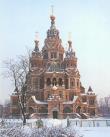
SS. PETER AND PAUL CATHEDRAL IN PETERHOF, located at 4/ 32 Sankt-Peterburgsky Avenue, Petrodvorets. An architectural monument in the Russian style. The construction project was ordered by Emperor Alexander III and commissioned by the Ministry of the
|
|
|
|
|
hidden
|
SS. Simon and Anna Church
SS. SIMON AND ANNA CHURCH, located at 46 Mokhovaya Street. An architectural monument, one of the oldest religious buildings in St. Petersburg. The church was constructed in 1731-34 (architect M. G
|
|
|
|
|
hidden
|
SS. Zachariah and Elizabeth Church
SS. ZACHARIAH AND ELIZABETH CHURCH of Cavalry Guard Regiment, located at 22 Zakharyevskaya Street, an architectural monument. The first stone church for the staff of the Court Chancellery was constructed on this place in 1752-53
|
|
|
|
|
hidden
|
St Stanislaus Roman Catholic Church
ST STANISLAUS ROMAN CATHOLIC CHURCH, located at 22 Soyuza Pechatnikov Street. An architectural monument of late Classicism, constructed in 1823-25 (architect D. I. Viskonti) on the site of the domestic chapel ("kaplitsy") of Catholic Metropolitan S
|
|
|
|
|
hidden
|
St. Alexander Nevsky Church in Ust-Izhora
ST. ALEXANDER NEVSKY CHURCH IN UST-IZHORA, the church dedicated to St. Blessed Prince Alexander Nevsky, located at Ust-Izhora, 217 Ninth of January Avenue. A memorial church erected on the left bank of the Izhora River at the confluence of the
|
|
|
|
|
hidden
|
St. Andrew's Cathedral in Kronstadt
ST. ANDREW’S CATHEDRAL in Kronstadt, at 17 Lenina Avenue. An architectural monument of late Classicism (Empire style), was erected in 1805-17 (by architects C. Cameron, A. D. Zakharov and A. N
|
|
|
|
|
hidden
|
St. Andrew’s Cathedral
ST. ANDREW’S CATHEDRAL, located at 21-23 Bolshoy Avenue, Vasilievsky Island, an architectural monument of the 18th century. It was erected in 1764-68 (by architects A. F. Wist, A. A
|
|
|
|
|
hidden
|
St. Anne’s Lutheran Church
ST. ANNE’S LUTHERAN CHURCH, located at 8 Kirochnaya Street, an architectural monument of the Classicist style. It was built in 1775-79 (architect Y. M. Felten) on the place of a brick chapel of the same name, constructed in 1735-40 (architect P. M
|
|
|
|
|
hidden
|
St. Catherine’s Armenian Church
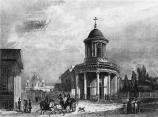
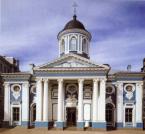
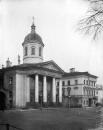
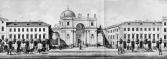
ST. CATHERINE’S ARMENIAN CHURCH located at Nevsky Prospect, between the houses 40 and 42. An architectural monument of early Classicism. It was built in 1771-1776 (architect Y. M. Felten) on land allotted in 1770 by merchant I. L
|
|
|
|
|
hidden
|
St. Catherine’s Cathedral in Tsarskoe Selo
ST. CATHERINE’S CATHEDRAL IN TSARSKOE SELO designed in Russian-Byzantine style by architect K. A. Ton, constructed on Sobornaya Square in 1835-40. In 1851-52, the side-altars were consecrated. The cathedral could hold 2,000 people
|
|
|
|
|
hidden
|
St. Catherine’s Lutheran Church
ST. CATHERINE’S LUTHERAN CHURCH, located at 1 Bolshoy Avenue of Vasilievsky Island. An architectural monument of early Classicism. Designed for the Lutheran Community of Vasilievsky Island (established in 1728) by architect Y. M
|
|
|
|
|
hidden
|
St. Catherine’s Roman Catholic Church
ST. CATHERINE’S ROMAN CATHOLIC CHURCH, located on Nevsky Prospect, between buildings 32 and 34. An architectural monument, constructed in 1763-83 in a transitional style merging Baroque with early Classicism (architect J. B
|
|
|
|
|
hidden
|
St. Catherine’s Swedish Church
ST. CATHERINE’S SWEDISH CHURCH, located at 1-3 Malaya Konyushennaya St., is an architectural monument. The classical building of the church (architect Y.M. Felten) was erected in 1767-69 for the needs of the Swedish Lutheran community
|
|
|
|
|