The subject index
/
The Green Belt of Glory
hidden
|
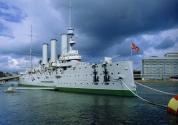
Aurora, cruiser
AURORA first rank cruiser was founded in 1897 at the New Admiralty dockyard, and became part of the Baltic Fleet in 1903. It weighed over 6,700 tons (in 1917 - 7
|
|
|
|
|
hidden
|
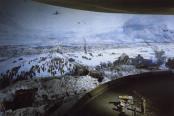
Breaking of the Siege (1943)
BREAKING OF THE SIEGE 1943, 12 - 30 January, an offensive operation, code named "Iskra" (Sparkle), along the Leningrad and Volkhov fronts by Baltic Fleet forces in the region of the Schlisselburg-Sinyavino heights
|
|
|
|
|
hidden
|
Buldakov G.N. (1924-1990), arhcitect
BULDAKOV Gennady Nikanorovich (1924-1990, Leningrad), architect, National Architect of the USSR (1984), associate (1974), full member (1988) of the Academy of Fine Arts of the USSR. From 1941, he worked at the Kirov Factory in Leningrad
|
|
|
|
|
hidden
|
Dudin M.A. (1916-1993), poet
DUDIN Mikhail Alexandrovich (1916-1993, St. Petersburg), poet, public figure. In 1937 entered the evening department of Faculty of Literature of the Ivanov Pedagogical Institute; in 1939 he was conscripted into the Army
|
|
|
|
|
hidden
|
English Park (Peterhof)
ENGLISH PARK is situated in the west part of Peterhof, in the lower course of Shinkarka River, to the north of Egerskaya Settlement and to the northwest of Lugovoy Park. Stary Petergof railway station is situated at its southwest outskirts
|
|
|
|
|
hidden
|
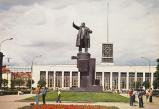
Finlyandsky Railway Station
FINLYANDSKY RAILWAY STATION (5 Lenina Square), was built in 1870 by architect P.S. Kupinsky. It was a single-story building with a 2-storied pavilion. The side facade with the pavilion for the members of the Imperial Family was accessed via the
|
|
|
|
|
hidden
|
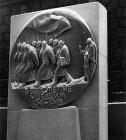
Great Patriotic War, Monuments to (entry)
GREAT PATRIOTIC WAR, MONUMENTS TO. The first monuments devoted to the heroic defence of Leningrad appeared in 1944, immediately after the Lifting of the Siege, with concrete steles depicting the Order of the Patriotic War in Memory of the Defensive
|
|
|
|
|
hidden
|
Izhora Battalion
IZHORA BATTALION, a volunteer subunit formed in Kolpino in September 1941 as a separate battalion of Izhora workers, gathered on the basis of previously organized detachments, which mainly consisted of workers form the Izhorsky Factory
|
|
|
|
|
hidden
|
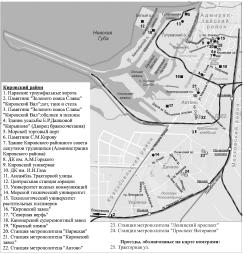
Kirovsky District
KIROVSKY DISTRICT is an administrative territorial unit of St. Petersburg. (Its territory administration is located at 18 Stachek Avenue). The district was named in honour of Sergey Kirov in 1934. Its present-day borders were established in 1973
|
|
|
|
|
hidden
|
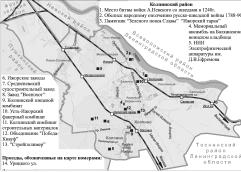
Kolpinsky District
KOLPINSKY DISTRICT, an administrative and territorial unit of Saint Petersburg (with the territorial administration situated in Kolpino, at 1 Uritskogo Street). The name derives from the town of Kolpino which is the centre of the district
|
|
|
|
|
hidden
|
Leningrad Region
LENINGRAD REGION, a federal subject of the Russian Federation located in the North-Western Federal District. Formed 1 June 1927, it has existed with its present boundaries since 1945
|
|
|
|
|
hidden
|
Neva Bridgehead
NEVA BRIDGEHEAD ("Nevsky Pyatachok"). A bridgehead on the left side of the Neva River near the Moskovskaya Dubrovka settlement and the village of Arbuzovo, occupied by Soviet troops on the night of 20 September 1941
|
|
|
|
|
hidden
|
Oranienbaum Bridgehead
ORANIENBAUM BRIDGEHEAD (Primorsky Bridgehead), a territory along the shore of the Gulf of Finland, from the Voronka River to Peterhof (about 65 km long and 25 km deep)
|
|
|
|
|
hidden
|
People's Volunteer Militia of 1941
PEOPLE'S VOLUNTEER MILITIA (NARODNOE OPOLCHENIE) OF 1941. Volunteer military units formed at the beginning of the Great Patriotic War of 1941-45, made up of people not subject to immediate draft upon mobilization
|
|
|
|
|
hidden
|
Pushkin, town
PUSHKIN, a town and municipal unit situated south of Saint Petersburg. Known until 1918 as Tsarskoe Selo, and in 1918-37 as Detskoe Selo. As of 2002, population totalled approximately 95,000 inhabitants
|
|
|
|
|
hidden
|
Sestra, river
SESTRA, a river in the north-west of St. Petersburg, which flows through Sestroretsky District and Kurortny District. The Novgorod Pistsovye Books (Property Registers) of the 15th century record the river as Sestreya (from Finnish word meaning
|
|
|
|
|
hidden
|
Tanya Savicheva, Diary of
TANYA SAVICHEVA, DIARY OF. One of the most tragic symbols of the Siege of 1941-44, the Diary of Tanya Savicheva was a notebook belonging to a Leningrad schoolgirl named Tatyana Nikolayevna Savicheva (1930-44)
|
|
|
|
|