|
|
|
The subject index
/
Leningrad Soviet
hidden
|
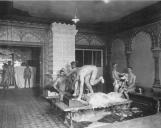
Baths (entry)
BATHS. The first baths in St. Petersburg were built near rivers and other reservoirs, separate from residential houses. About 30 so-called commercial baths were constructed by 1720. Construction was paid for by the Treasury
|
|
|
|
|
hidden
|
City Administration (entry)
CITY ADMINISTRATION. The system of City Administration in St. Petersburg from the beginning of the 18th century developed in 2 directions - the city government and self-government (see City self-government). From 1703 the city was governed by A. D
|
|
|
|
|
hidden
|
City Self-Government
CITY SELF-GOVERNMENT, elected organs responsible for different aspects of city life. The beginning of City Self-Government was laid by Tsar Peter the Great, who set up the Town council in 1710 in St. Petersburg
|
|
|
|
|
hidden
|
Coat of Arms, St. Petersburg
ST. PETERSBURG COAT OF ARMS, an officially approved heraldic emblem. The first known St. Petersburg coat of arms was on the banner of the St. Petersburg Regiment (1712), and showed a heart on the princely mantle beneath a princely crown
|
|
|
|
|
hidden
|
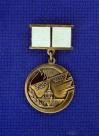
Commemorative badge To the Residents of Besieged Leningrad
TO THE RESIDENTS OF BESIEGED LENINGRAD, a commemorative medal, instituted by the Executive Committee of the Leningrad Soviet of 23 January 1989. The decoration was conferred upon those people who lived in Leningrad during the siege of 1941-44 for
|
|
|
|
|
hidden
|
Kodatsky I.F. the chairman of Leningrad Soviet in 1929-37
KODATSKY (Kadatsky) Ivan Fedorovich (1893-1937), Soviet statesman and party worker. He graduated from the vocational school in Nikolaev, worked as a turner there, took part in workers' strikes
|
|
|
|
|
hidden
|
Komarov N.P. the chairman of Leningrad Soviet in 1926-28
KOMAROV Nikolay Pavlovich (born Fedor Evgenyevich Sobinov) (1886-1937), a statesman and Soviet Party worker. Had been living in St. Petersburg since 1902. In 1912 he graduated from the city 4-grade technical school
|
|
|
|
|
hidden
|
Popkov P.S. the 1st secretary of the regional party committee in 1946-49
POPKOV Peter Sergeevich (1903-1950), statesman and party worker. In 1917-25 he worked as a joiner in Vladimir. Since 1925, a member of All-Union Communist Party (bolshevist)
|
|
|
|
|
hidden
|
Sewerage System
SEWERAGE SYSTEM, wastewater treatment facilities. In the first quarter of the 18th century as the city territory grew, it was drained, and the system for discharge of surface water was built in the shape of plank-secured ditches along the city
|
|
|
|
|
hidden
|
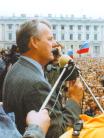
Sobchak A.A. chairman of Leningrad Soviet, mayor in 1990-96
SOBCHAK Anatoly Alexandrovich (1937-2000), statesman and public figure, doctor of law (1982), professor (1982). He graduated from the School of Law of Leningrad State University (1959). Sobchak worked for the Stavropol Regional College of Lawyers
|
|
|
|
|
hidden
|
St. Petersburg Flag
ST. PETERSBURG FLAG, one of the official symbols of St. Petersburg. Instituted in 1990 according to a decree by the Leningrad Soviet, then put onto the State Heraldic Register of the Russian Federation (under № 64)
|
|
|
|
|
hidden
|
Vyazemsky S.M. (1895-1983, Leningrad), regional ethnographer
VYAZEMSKY Sergey Mikhailovich (1895-1983, Leningrad), collector, regional ethnographer, and historian. He graduated from the Economics Department of Tashkent Institute (1925)
|
|
|
|
|
|
hidden
|
|
hidden
|
|
hidden
|
|
hidden
|
|
hidden
|
|
hidden
|
|
hidden
|
|
hidden
|
|
hidden
|
|
hidden
|
|
hidden
|
|
hidden
|
|
hidden
|
|
hidden
|
|
hidden
|
|
hidden
|
|
hidden
|
|
hidden
|
|