The subject index
/
hidden
|
Admiralteisky Avenue
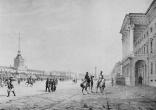
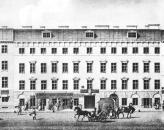
ADMIRALTEISKY AVENUE (Admiralty Avenue) in the mid-to-late 18th century - Admiralteiskaya Street or Bolshaya Street, in 1918-44 - Roshalya Avenue in honour of revolutionary S. G. Roshal (1896-1917). A link between Palace Square and St
|
|
|
|
|
hidden
|
Admiralteisky District
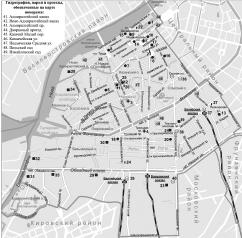
ADMIRALTEISKY DISTRICT, (Admiralty) an administrative territorial unit of St. Petersburg (Its territory administration is located at 10 Izmailovsky Avenue), is one of the central districts of the city
|
|
|
|
|
hidden
|
Admiralteyskaya Side
ADMIRALTEYSKAYA SIDE, a historical name of the central part of St. Petersburg bound on the north by the Neva river and on the south by the Moika River. Formed in the early 18th century when the General Admiralty
|
|
|
|
|
hidden
|
Admiralty
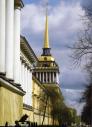
ADMIRALTY, in the 18-19 centuries - a place for the building and repairing of warships, provided with all the necessary equipment (dockyards, ship-ways, slipways, storehouses, workshops, etc.). In St
|
|
|
|
|
hidden
|
Anniversaries of Petersburg (centenary, bicentenary, two hundred fiftieth anniversary, tercentenary)
ANNIVERSARIES OF ST. PETERSBURG. St. Petersburg's first anniversary celebration (the city's centenary) took place in 1803. Celebrations started on the morning of 16 May 1803
|
|
|
|
|
hidden
|
Antireligious Museum
ANTIRELIGIOUS MUSEUM existed from 1930 to 1937 and was housed in St. Isaac's Cathedral. The museum was one of the main centres of atheist propaganda in the USSR
|
|
|
|
|
hidden
|
Artillery Bombardments of 1941-44
ARTILLERY BOMBARDMENTS OF 1941-44, conducted by long-range German artillery in order to destroy Leningrad's industrial and military facilities, and to spread panic among its population during the siege of 1941-1944
|
|
|
|
|
hidden
|
Bethencourt A. A. (1758-1824), engineer.
BETHENCOURT Augustin Augustinovich (Augustin) (1758-1824, St. Petersburg), mechanical engineer, constructor, Lieutenant General (1809). Native of Spain. From 1808, he was in Russian service, from 1809
|
|
|
|
|
hidden
|
Bird Charles, (1766-1843), engineer, entrepreneur
BIRD Karl Nikolaevich (Charles) (1766-1843, St. Petersburg), engineer and entrepreneur. A native of Scotland, he lived in Russia from 1786, serving as an assistant to K. K. Gascoigne at Alexandrovsky Gun Works in Petrozavodsk until he moved to St
|
|
|
|
|
hidden
|
Brenna V.F. (1745-1819), architect
BRENNA Vikenty Franzevich (1745-1819 or 1820?), architect, decorative artist, a representative of Neoclassicism. Native of Italy. Prior to his coming to Russia, he worked in Rome and Warsaw
|
|
|
|
|
hidden
|
Bruni F.А., (1799-1875), painter
BRUNI Fedor (Fidelis) Antonovich (1799-1875, St. Petersburg), painter. Studied under A. I. Ivanov, A. E. Egorov, and V. K. Shebuev at the Academy of Arts in 1809-18
|
|
|
|
|
hidden
|
Bryullov K.P. (1799-1852), artist
BRYULLOV Karl Pavlovich (1799, St. Petersburg - 1852), painter. A. P. Bryullov’s brother. He studied under A. I. Ivanov, A. E. Egorov, and V. K. Shebuev in the Academy of Arts in 1809-21
|
|
|
|
|
hidden
|
Chevakinsky S. I. (1713-1783), architect
CHEVAKINSKY Savva Ivanovich (1713-1783), architect, representative of the Baroque. From 1729, studied at the Moscow Preparatory School of the St. Petersburg Naval Academy, in 1732-38 apprenticed in architecture with I.K
|
|
|
|
|
hidden
|
Decembrist Revolt of 1825
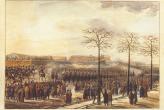
DECEMBRIST REVOLT OF 1825, the first overt armed revolt against autocracy and the ownership of serfs in Russia. It was prepared by the Northern Decembrist Society
|
|
|
|
|
hidden
|
Foil Rolling Plant
FOIL ROLLING PLANT (1 Perevoznaya Street), an open joint-stock company from 1992, the only aluminium foil manufacturer in European Russia. It was founded by K. N
|
|
|
|
|
hidden
|
Galernaya Street
GALERNAYA STREET, runs from Dekabristov Square to Novo-Admiralteysky Canal Embankment crossing Truda Square. In 1738, it was known as Isaakievskaya Street (after St
|
|
|
|
|
hidden
|
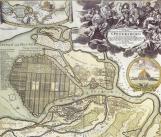
General Plans for the Development of Petersburg-Leningrad
GENERAL PLANS FOR THE DEVELOPMENT OF PETERSBURG-LENINGRAD. One the first projects of St. Petersburg planning dates back to 1709-12. According to it, the city centre should be situated at Kotlin Island and was to be connected to outer parts of the
|
|
|
|
|
hidden
|
Geological location
GEOLOGICAL LOCATION. St. Petersburg along with its outskirts is located on the convergence of two major tectonic structures: the southern Baltic Plate and the Northwest Russiаn Plate of the East European plain
|
|
|
|
|
hidden
|
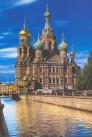
Holy Resurrection Cathedral, (Spas-na-Krovi)
HOLY RESURRECTION CATHEDRAL, (SPAS-NA-KROVI "Church of Our Saviour on the Blood", located at 2a Griboedova Canal Embankment, a church constructed in 1883-1907 (architects A. A
|
|
|
|
|
hidden
|
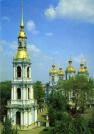
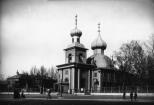
Holy Trinity and St Peter's Cathedral
HOLY TRINITY AND ST PETER'S CATHEDRAL, located at Troitskaya Square. An 18th century architectural monument. The first wooden church on this place was built in 1709-11, by order of Tsar Peter the Great
|
|
|
|
|
hidden
|
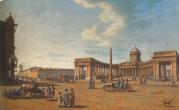
Kazan Cathedral
KAZAN CATHEDRAL, Our Lady of Kazan Сathedral (2 Kazanskaya Square). A monument of Classical architecture. In 1733-1737, the three sided stone Church of the Nativity of the Virgin Mary, with a high bell tower, stood on this spot (architect M.G
|
|
|
|
|
hidden
|
Khrenov A. S. (1860-1926), architect
KHRENOV Alexander Sergeevich (1860, St. Petersburg - 1926), architect and aquarellist. Graduated from St. Petersburg Academy of Fine Arts (1884). In 1888, assumed the position of architect of St
|
|
|
|
|
hidden
|
Klenze Leo von (1784-1864), architect
KLENZE LEO VON (1784-1864), Bavarian architect, artist, theorist and historian of architecture, master of Eclecticism, concentrated on the Classic and Renaissance styles, Associate Member of the Academy of Fine Arts (1834)
|
|
|
|
|
hidden
|
Lvov А.F. (1798-1870), composer
LVOV Alexey Fedorovich (1798-1870), military engineer, violinist, composer, conductor, and musician, major general (1843), privy counsellor (1853), and senator (1855). He was a son of F. P
|
|
|
|
|
hidden
|
Messmacher M. E. (1842-1906), architect
MESSMACHER Maximilian Egorovich (1842, St. Petersburg 1906), architect, associate academy member of architecture (1872). Graduated from Peterschule, the School of Painting of the St. Petersburg Society of Artists, in 1867 - the Academy of Fine Arts
|
|
|
|
|
hidden
|
Montferrand A.A. (1786-1858), architect
MONTFERRAND Auguste Augustovich (Henri Louis Auguste Leger Richard) (1786-1858, St. Petersburg), architect, actual state counsellor (1858), honorary associate of the St. Petersburg Academy of Fine Arts
|
|
|
|
|
hidden
|
Museum of the Academy of Arts
MUSEUM OF THE ACADEMY OF ARTS, a science and research museum (17 University Embankment), Russia's oldest art museum, founded by I. I. Shuvalov in 1757 as a collection of samples for the students of drawing and sculpture classes at the Academy of
|
|
|
|
|
hidden
|
Natural stone
NATURAL STONE. Since the early 18th century, Putilovo slab limestone has been used in construction (quarried by Putilovskaya Mountain near the mouth of the Volkhov River)
|
|
|
|
|
hidden
|
Nicholas I, Emperor (1796-1855)
NICHOLAS I (1796, Tsarskoe Selo - 1855, St. Petersburg), Emperor (from 1825). Emperor Pavel I and Empress Maria Fedorovna's third son. Married the Princess of Prussia (1817), who took the name of Alexandra Fedorovna
|
|
|
|
|
hidden
|
Pavements
PAVEMENTS have been built in St. Petersburg since the early 18th century. The first pavements were made of boards, later various paving materials were applied, including planks, cobblestones, asphalt, woodblocks, granite, metal, road metal (pebbles)
|
|
|
|
|