|
|
|
Entries
/
hidden
|
Founding of St. Petersburg
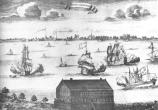
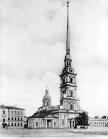
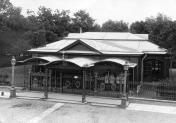
FOUNDING OF ST. PETERSBURG. In May 1703, after the surrender of Nyenschantz, Tsar Peter the Great decided to build a fortress at the mouth of the Neva River on Zayachy Island
|
|
|
|
|
hidden
|
Grilles (entry)
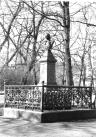
GRILLES. St. Petersburg boasts a number of unique metal grilles, created in the course of three centuries. Wrought grilles of bars with (sometimes gilded) decorative figures made from flat iron bars (the grille of the Ekaterininsky (Catherine)
|
|
|
|
|
hidden
|
Hessen A.E. (1917- 2001 ), architect-restorer
Hessen Alexander Ernestovich (1917, Petrograd - 2001, St. Petersburg), architect, restorer, one of the founders of the school of scientific architectural restoration in Leningrad. He graduated from the Academy of Fine Arts (1939)
|
|
|
|
|
hidden
|
Landings, Water (entry)
LANDINGS, WATER. Ship landings were present in St. Petersburg from the first years of its existence. Their location depended on the location and orientation of storage warehouses
|
|
|
|
|
hidden
|
Peter the Great (1672-1725), Emperor
Peter the Great (Peter I) (b. 1672, d. 1725 in St. Petersburg), Tsar (from 1682) and Emperor (from 1721) of Russia, founder of St. Petersburg. Peter was the son of Tsar Alexey Mikhailovich (born from his second marriage) and N. K. Naryshkina
|
|
|
|
|
hidden
|
Petrogradskaya Side
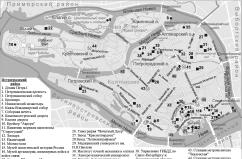
PETROGRADSKAYA SIDE (in the 18th century - Gorodskaya Side, until 1914 - Peterburgskaya Side), the joint name of the territory that includes the following islands: Petrogradsky, Aptekarsky, Petrovsky and Zayachy
|
|
|
|
|
hidden
|
Petrogradsky District
PETROGRADSKY DISTRICT, an administrative and territorial unit of St. Petersburg, with its administration located at 19 Bolshaya Monetnaya Street. The district was formed in 1917, and in 1936 the Primorsky District was separated from its territory
|
|
|
|
|
hidden
|
Petrovskaya Embankment
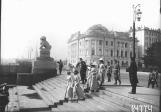
PETROVSKAYA EMBANKMENT lying between Troitskaya Square and Petrogradskaya Embankment on the right bank of the Neva River on Petrogradskaya Side. It appeared in what was then the city centre in the 1700s as the first embankment of St. Petersburg
|
|
|
|
|
hidden
|
Postwar Restoration of Architectural Monuments
POSTWAR RESTORATION OF ARCHITECTURAL MONUMENTS. During the Siege of 1941-44, 187 of 210 buildings registered by the government as architectural monuments suffered from bombardment, suburban palaces-museums (except for Oranienbaum) were ruined
|
|
|
|
|
hidden
|
Sea Port
SEA PORT, Merchant (located at 5 Mezhevoy Canal) is one of the oldest merchant seaports of Russia, and the biggest operator of cargo traffic in St. Petersburg Sea Port. The first port buildings were laid in St
|
|
|
|
|
|
hidden
|
|
hidden
|
|
hidden
|
|
hidden
|
|
hidden
|
|
hidden
|
|
hidden
|
|