The subject index
/
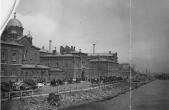
Kresty Prison.
hidden
|
Antonov-Ovseenko V.A. (1883-1939), revolutionary, political figure
ANTONOV-OVSEENKO (real name Ovseenko) Vladimir Alexeevich (1883-1938), revolutionary. Studied at Nikolaevsky Military Engineering school of St. Petersburg, in 1901 was sacked for his refusal to swear loyalty
|
|
|
|
|
hidden
|
Arsenalnaya Embankment
ARSENALNAYA EMBANKMENT on the right bank of the Neva River between Arsenalnaya Street and Akademika Lebedeva Street. It was so named in 1887 after Novy Arsenal Plant (today, Arsenal Joint-Stock Company situated in house 1)
|
|
|
|
|
hidden
|
"Brick Style"
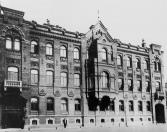
"BRICK STYLE". The term used in Russian art-historical literature for a so-called rational trend in architecture from the second half of the 19th - beginning of the 20th centuries
|
|
|
|
|
hidden
|
Dybenko P.E. (1889-1939), revolutionary, statesman
DYBENKO Pavel Efimovich (1889-1938), Soviet military officer and party figure. Army commander of the second rank (1935). In 1911 he was conscripted into the Baltic Fleet
|
|
|
|
|
hidden
|
February Revolution of 1917
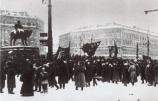
FEBRUARY REVOLUTION OF 1917 is the Second Russian Revolution, which dethroned the Monarchy. Decisive events developed in Petrograd. On 23 February (8 March) 1917
|
|
|
|
|
hidden
|
Lunacharsky A.V. (1875-1933), revolutionary, statesman
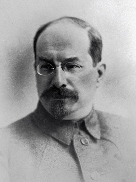
LUNACHARSKY Anatoly Vasilievich (1875-1933), Soviet statesman and party figure, playwright, literary critic, Member of the Academy of Sciences of the USSR (1930)
|
|
|
|
|
hidden
|
Milyukov P.N. (1859-1943), statesman, historian
MILYUKOV Pavel Nikolaevich (1859-1943), statesman, historian, essayist, honorary doctor of Cambridge University (1916). He graduated from the Faculty of History and Philology of Moscow University in 1882. From 1886, he was a private tutor there
|
|
|
|
|
hidden
|
Nabokov Family
NABOKOV Family, noble family, known since the mid 17th century. Several family members are closely associated with St. Petersburg. Ivan Alexandrovich Nabokov (1787-1852, St Petersburg), Infantry General (1835), Adjutant General (1844)
|
|
|
|
|
hidden
|
Petrunkevich I. I. (1844-1928), public figure
PETRUNKEVICH Ivan Ilyich (1844-1928) was a public figure and statesman. He was a father-in-law of Countess S.V. Panina. On graduating from the Faculty of Law of St
|
|
|
|
|
hidden
|
Prisons (entry)
PRISONS. The first prison in St. Petersburg (Convict gaol, or Convict yard, until 1732 under the jurisdiction of the Admiralty) was built in 1706 in the area of present-day Truda square
|
|
|
|
|
hidden
|
Red Terror
RED TERROR, a policy of repression pursued by the Soviet government in its early years in order to frighten and kill actual and potential (often imaginary) opponents to the Bolshevik regime
|
|
|
|
|
hidden
|
"Sharashki"
"SHARASHKI", the name of secret research institutes or design institutions (Special Design Bureau, Technical Bureau, etc.), that functioned in 1931-55 in the system of the Joint State Political Administration Board of the People's Commissariat of
|
|
|
|
|
hidden
|
Victims of Political Repressions, Monuments,
MONUMENTS TO THE VICTIMS OF POLITICAL REPRESSIONS, the foundation stone of the monument To the Victims of Political Repressions in Petrograd -Leningrad was laid in 1990 on Revolyutsii Square that was given its historical name, Troitskaya Square
|
|
|
|
|
hidden
|
Vinaver M. M. (1863-1926), public figure
VINAVER Maxim Moiseevich (1862 or 1863-1926) was a public and political figure, and lawyer. On graduating from the Faculty of Law of Warsaw University (1886), he became an assistant to an attorney (from 1904 an attorney in St. Petersburg)
|
|
|
|
|
hidden
|
Voroshilov K.E. (1881-1969), statesman, marshal
VOROSHILOV Kliment Efremovich (1881-1969), Soviet statesman and military officer, Marshal of the Soviet Union (1935), Hero of the Soviet Union (1956, 1968), Hero of Socialist Labour (1960)
|
|
|
|
|
|
hidden
|
|
hidden
|