The subject index
/
St. Peter and Paul fortress
hidden
|
Alexeevsky Ravelin
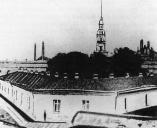
ALEXEEVSKY RAVELIN, an outer fortification of Peter and Paul fortress, situated in its western part, before Vasilievskaya curtain wall. The ravelin was named so in honour of Tsar Alexey Mikhaylovich. It was built in 1733-40 (engineer C.A. Munnich, C
|
|
|
|
|
hidden
|
Alexey Petrovich, Tsesarevitch (1690-1718)
ALEXEY PETROVICH (1690-1718, St. Petersburg), Tsarevich, heir to the throne, eldest son of Tsar Peter I and his first wife E.F. Lopukhina, father of Emperor Peter II. Received home education
|
|
|
|
|
hidden
|
Anna Ioanovna, Empress (1693-1740)
ANNA IOANNOVNA (1693-1740, St. Petersburg), Empress (from 1730). The daughter of Tsar Ivan V, niece of Tsar Peter the Great. In 1710, she married Friedrich Wilhelm, Duke of Courland, and within two months she was widowed
|
|
|
|
|
hidden
|
Anniversaries of Petersburg (centenary, bicentenary, two hundred fiftieth anniversary, tercentenary)
ANNIVERSARIES OF ST. PETERSBURG. St. Petersburg's first anniversary celebration (the city's centenary) took place in 1803. Celebrations started on the morning of 16 May 1803
|
|
|
|
|
hidden
|
Aptekarsky Lane
APTEKARSKY LANE, translated as Pharmacy Lane, between Millionnaya Street and Moika River Embankment. It was laid in 1730s and called Aptekarskaya Street from the early 1730s to 1780s. The lane was so named after the Central Pharmacy moved from SS
|
|
|
|
|
hidden
|
Arsenals (general article)
ARSENALS, establishments for storing and repairing weapons and ammunition, as well as buildings meant for such use. The first arsenals in St. Petersburg (Zeughaus) were built in 1703-05 in St Peter and Paul Fortress and the Admiralty Fortress
|
|
|
|
|
hidden
|
Artillery and Engineer Schools of the 18th Century (entry)
ARTILLERY AND ENGINEERING SCHOOLS OF THE 18TH CENTURY were the military educational institutions for artillery and engineer officers. The Engineering School was founded in 1719
|
|
|
|
|
hidden
|
Avsteria Traktir
AVSTERIA. Also know as the Osteria; traktir from the Italian meaning "public house"; austeritas, from the Latin meaning "gloomy, dark, rough". The first drinking- and gambling-house in St
|
|
|
|
|
hidden
|
Balk A.P., the city guard 1916-17
BALK Alexander Pavlovich (1866-1957), statesman, Major General (1912). He graduated from the First Cadet Corps (he was a classmate of the future last minister of Internal Affairs of the Russian empire A. D
|
|
|
|
|
hidden
|
Belova L.N. (1924-1993), Director of the Museum of Leningrad History
BELOVA Lyudmila Nikolaevna (1924-1993, St. Petersburg), museum worker, Honorary Worker of Culture of the Russian Soviet Federative Socialist Republic (1965). Graduated from the Faculty of History of the M. N
|
|
|
|
|
hidden
|
Bestuzhev A.A. (1797-1837), writer, critic, decembrist
BESTUZHEV (pen name Marlinsky) Alexander Alexanderovich (1797, St. Petersburg - 1837), writer, critic, decembrist, staff-captain (1825). Trained at the Mining Cadet Corps but never graduated (1810-15)
|
|
|
|
|
hidden
|
Bestuzhev-Ryumin M. P. (1801-1826), decembrist
BESTUZHEV-RYUMIN Mikhail Pavlovich (1801-26), Decembrist, Podporuchik (Sub-Lieutenant) of Poltavsky Infantry Regiment in 1824. Educated at home, he made his service in the Kavalergardsky Regiment in 1818-20 and the Semenovsky Life Guard Regiment in
|
|
|
|
|
hidden
|
Bolshaya Zelenina Street
BOLSHAYA ZELENINA STREET, running from Maly Avenue of Petrogradskaya Side to Admirala Lazareva Embankment. The street was laid in the 1710s as a road leading from the St
|
|
|
|
|
hidden
|
Bruce R.V. (1668-1720), commandant o Peter and Paul Fortress
BRUCE Roman Villimovich (1668-1720, St. Petersburg), statesman and military officer, Lieutenant General (1718?). Son of a Scottish emigrant, brother of Y. V. Bruce
|
|
|
|
|
hidden
|
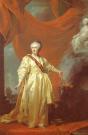
Catherine II (1729-1796), Empress
Catherine II (1729-1796, St. Petersburg), Empress (from 1761), wife of Emperor Peter III (1745). Nee Sophie Augusta Frederica of Anhalt-Zerbst. Lived in St. Petersburg from 1744, coming to power by dethroning her husband (1762)
|
|
|
|
|
hidden
|
Chernov V. M. (1873-1952), Socialist Revolutionary
CHERNOV Viktor Mikhailovich (1873-1952) was a political figure, sociologist, and publicist. On graduating from Derpt Gymnasium (1892) he entered the Faculty of Law of Moscow University, and participated in revolutionary circles
|
|
|
|
|
hidden
|
City Archaeology
CITY ARCHAEOLOGY. A branch of archaeological research, developed in St. Petersburg (Leningrad) from the middle of the 20th century. Archaeological research in the city started with archaeological excavations conducted in 1952 by archaeologist A.D
|
|
|
|
|
hidden
|
City Holidays (entry)
CITY HOLIDAYS. In the early 18th century tsar Peter the Great established a new type of holidays which were divided into official (or state holidays) - victory celebrations, jubilees etc. and popular carnivals (see Popular carnivals)
|
|
|
|
|
hidden
|
Commandant's House
COMMANDANT'S HOUSE, the commandant's residence at Peter and Paul Fortress. The first wooden Commandant's house was constructed in 1704. In 1718, it was replaced by a new building
|
|
|
|
|
hidden
|
Commandants of Peter and Paul Fortress
COMMANDANTS OF PETER AND PAUL FORTRESS, military officials, in charge of Ss. Peter-and-Paul Fortress, and garrisons and establishments located on its territory
|
|
|
|
|
hidden
|
Confessions, Non-Orthodox (entry)
NON ORTHODOX CONFESSIONS, Christian non-Orthodox churches. From the beginning of the 18th century, St. Petersburg was the centre of foreign confessions in Russia. The most numerous community were the Roman Catholics
|
|
|
|
|
hidden
|
Dan F. I. (1871-1947), Social Democrat, Menshevik
DAN (birth name Gurvich) Fedor Ilyich (1871, St. Petersburg - 1947), a statesman. On graduating from the Faculty of Medicine of Yuryev University (1895) Dan worked as a doctor of Obukhovskaya Hospital of St. Petersburg
|
|
|
|
|
hidden
|
Decembrist Revolt of 1825
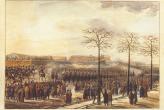
DECEMBRIST REVOLT OF 1825, the first overt armed revolt against autocracy and the ownership of serfs in Russia. It was prepared by the Northern Decembrist Society
|
|
|
|
|
hidden
|
Decembrists
DECEMBRISTS, members of secret societies, mainly, Guard officers and Masonic lodge members, who excited a rebellion against autocracy and serfdom in December 1825 (hence the name). Many of the future Decembrists were born in St
|
|
|
|
|
hidden
|
Dissident Movement
DISSIDENT MOVEMENT, a term used to define ideologically heterogeneous trends of the opposition in the USSR in the 1960-80s (since 1969, the term has been used in the foreign official press
|
|
|
|
|
hidden
|
Dolgorukov Family
DOLGORUKOV (Dolgoruky), princely family, the Rurik Dinasty, important in the 15th century. Yakov Fedorovich Dolgorukov (1639-1720, St. Petersburg) was a statesman, associate of Peter the Great's, boyar (1697)
|
|
|
|
|
hidden
|
Dostoevsky F. M. (1821-1881), writer
DOSTOEVSKY Fedor Mikhaylovich (1821-1881, St. Petersburg), writer, corresponding member of the Petersburg Academy of Sciences (1877). In 1837 came to St. Petersburg
|
|
|
|
|
hidden
|
Foundation for the Renaissance of St. Petersburg-Leningrad
FOUNDATION FOR THE RENAISSANCE OF ST. PETERSBURG-LENINGRAD (the International Charitable Foundation for the Renaissance of St. Petersburg-Leningrad until 2000) (31 Kirochnaya Street), a non-profit association
|
|
|
|
|
hidden
|
Founding of St. Petersburg
FOUNDING OF ST. PETERSBURG. In May 1703, after the surrender of Nyenschantz, Tsar Peter the Great decided to build a fortress at the mouth of the Neva River on Zayachy Island
|
|
|
|
|
hidden
|
Gannibal (Hannibal) А.P. (1697-1781), engineer, general
GANNIBAL Abram (Ibrahim) Petrovich (around 1696-1781, of Suyda Sofiysky District, St. Petersburg Province), Peter the Great's godson, military engineer, chief engineer (1756), Major-General (1759), great-grandfather of Аlexander Pushkin
|
|
|
|
|