|
|
|
The subject index
/
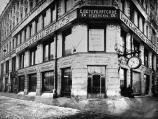
Post Office, Central
hidden
|
Archives, St. Petersburg
ARCHIVES, SAINT PETERSBURG, the Central State Archives of St. Petersburg situated at 15 Varfolomeevskaya Street. They were founded as the Leningrad Regional Archives of the October Revolution in 1936 and renamed as the State Archives of the October
|
|
|
|
|
hidden
|
City Clock
CITY CLOCK. The very first mechanical clock in the city was installed in 1704 in the tower of wooden St. Peter and Paul Cathedral. In 1710, the first striker clock (with chimes) was set up on the belfry of the Church of St
|
|
|
|
|
hidden
|
Communication Museum
COMMUNICATION MUSEUM, A. S. Popov Central (7 Pochtamtskaya Street) is the first such museum in Russia. It ranks among the biggest museums of its kind in the world
|
|
|
|
|
hidden
|
February Revolution of 1917
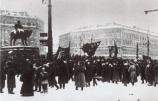
FEBRUARY REVOLUTION OF 1917 is the Second Russian Revolution, which dethroned the Monarchy. Decisive events developed in Petrograd. On 23 February (8 March) 1917
|
|
|
|
|
hidden
|
Lvov N.A. (1751-1803), architect
LVOV Nikolay Alexandrovich (1751-1803), architect, poet, engraver, scientist, engineer, privy counsellor, member of the Russian Academy (1783), honorary member of the Academy of Arts (1786). Received a home education
|
|
|
|
|
hidden
|
October Revolution (October Armed Revolt) of 1917
OCTOBER REVOLUTION (OCTOBER ARMED REVOLT) of 1917, the name accepted in Soviet historical literature of the events in Petrograd of 24 -26 October (6 -8 November) 1917
|
|
|
|
|
hidden
|
Pochtamtskaya Street
POCHTAMTSKAYA STREET, between St. Isaac's Square and Konnogvardeisky Lane. The road was built in the first quarter of the 18th century, in the 1730s it was known as Pushkarskaya Street (after Pushkarskaya, meaning Artillerymen, settlement)
|
|
|
|
|
hidden
|
Pochtamtsky Bridge
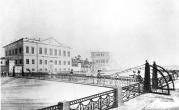
POCHTAMTSKY BRIDGE (Post Office Bridge), over the Moika River, beside Prachechny Lane. The bridge was built in 1823-24 (engineers V.K. Traitteur, V.A. Khristianovich) as a chain pedestrian bridge to replace a four-span wooden beam bridge that had
|
|
|
|
|
hidden
|
Public Lavatory
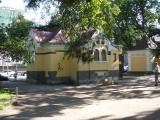
PUBLIC LAVATORY. Since the early 18th century, primitive latrines were arranged on the territory of gostiny dvors, markets, ports, and along river and canal banks
|
|
|
|
|
hidden
|
Sokolov E.T. (1750-1824), architect.
SOKOLOV Egor Timofeevich (1750, Peterhof 1824, St. Petersburg), architect, constructor, representative of Neoclassicism. Took courses taught by the Chancellery for Urban Planning, worked on the construction site of the palace in Peterhof
|
|
|
|
|
hidden
|
Yakubovicha Street
YAKUBOVICHA STREET, called Novo-Isaakievskaya Street until 1923, after St. Isaac's Cathedral, running between Isaakievskaya Square and Truda Square. The street was named after Decembrist A.I. Yakubovich (1792-1845)
|
|
|
|
|
|
hidden
|
|
hidden
|
|
hidden
|
|