The subject index
/
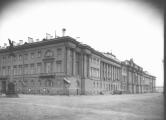
Senate and Synod Buildings
hidden
|
Admiralteisky District
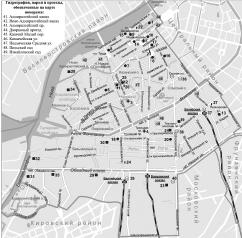
ADMIRALTEISKY DISTRICT, (Admiralty) an administrative territorial unit of St. Petersburg (Its territory administration is located at 10 Izmailovsky Avenue), is one of the central districts of the city
|
|
|
|
|
hidden
|
Angliiskaya Embankment
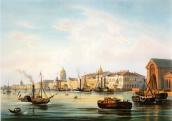
ANGLIISKAYA EMBANKMENT, from 1738 - Beregovaya Nizhnaya Embankment Street, in the mid-to-late 18th century - Isaakievskaya Embankment, Galernaya Embankment, and Anglinskaya Embankment, from 1800s - Angliiskaya Embankment
|
|
|
|
|
hidden
|
Bird Charles, (1766-1843), engineer, entrepreneur
BIRD Karl Nikolaevich (Charles) (1766-1843, St. Petersburg), engineer and entrepreneur. A native of Scotland, he lived in Russia from 1786, serving as an assistant to K. K. Gascoigne at Alexandrovsky Gun Works in Petrozavodsk until he moved to St
|
|
|
|
|
hidden
|
Bolshaya Neva
BOLSHAYA NEVA, the largest left branch of the the Neva river delta; a continuation of the Neva River below the Dvortsovaya Bridge. The Bolshaya Neva flows into the Neva Bay of the Gulf of Finland, in the area surrounded by Vasilievsky Island
|
|
|
|
|
hidden
|
Dekabristov Square
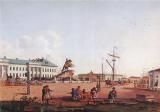
DEKABRISTOV SQUARE (prior to 1925, also called Senatskaya, Petrovskaya), is situated between Admiralteyskaya Embankment and St. Isaac Square. It appeared at the beginning of the 18th century west of the outer bank of Admiralty Fortress;
|
|
|
|
|
hidden
|
Demut-Malinovsky V.I., (1779-1846), sculptor
DEMUT-MALINOVSKY Vasily Ivanovich (1779 - 1846, St. Petersburg), sculptor. Studied at the Academy of Arts (1785-1800) under M.I. Kozlovsky, and received a retainer from the Academy of Arts to study in Rome (1803-06)
|
|
|
|
|
hidden
|
General Plans for the Development of Petersburg-Leningrad
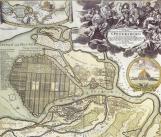
GENERAL PLANS FOR THE DEVELOPMENT OF PETERSBURG-LENINGRAD. One the first projects of St. Petersburg planning dates back to 1709-12. According to it, the city centre should be situated at Kotlin Island and was to be connected to outer parts of the
|
|
|
|
|
hidden
|
Jacot P., (1798-1860), architect.
JACOT Pavel Petrovich (1798-1860), architect and builder, representative of the late Neoclassicism. Native of France, he studied at the School of Fine Arts in Paris (1812-21) under the supervision of Debreu and L.I. Leba. In 1822 he came to St
|
|
|
|
|
hidden
|
Kvasov A.V., architect
KVASOV Andrey Vasilyevich (circa 1718, St. Petersburg - after 1777), architect, master of Baroque. Brother of Alexey V. Kvasov. He studied at the Construction Office under the guidance of architect M.G. Zemtsov
|
|
|
|
|
hidden
|
Public Lavatory
PUBLIC LAVATORY. Since the early 18th century, primitive latrines were arranged on the territory of gostiny dvors, markets, ports, and along river and canal banks
|
|
|
|
|
hidden
|
Rossi C.I. (1775-1849), architect
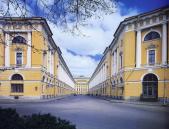
ROSSI Carl Ivanovich (Carlo Giovanni) (1775-1849, St. Petersburg), architect. The son of the court ballerina G. Lepik. Graduated from the Peterschule in St. Petersburg, apprenticed architecture with V
|
|
|
|
|
hidden
|
Russian Historical Archive
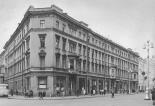
RUSSIAN HISTORICAL ARCHIVE, STATE (RSHA) (4 Angliiskaya Embankment) was founded in 1925 as the Leningrad Historical Archive. In 1929-34, it became Leningrad Department of the Central Historical Archive
|
|
|
|
|
hidden
|
Senate
SENATE (The Ruling Senate) was the highest state institution of the Russian Empire. It was founded by Tsar Peter the Great on 22 February 1711 as the highest organ of legislation, administration and judiciary
|
|
|
|
|
hidden
|
State Assembly
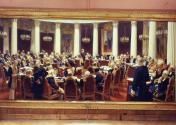
STATE ASSEMBLY was the highest advisory (from 1906, legislative) body in the Russian Empire. It was established by a Decree on 30 March 1801, and transformed on 1 January 1810
|
|
|
|
|
hidden
|
Synod
SYNOD (Apostolic Governing Synod), the highest collective organ of government of the Russian Orthodox Church, legislative and deliberative body, administrative and judicial institution
|
|
|
|
|
|
hidden
|
|
hidden
|