The subject index
/
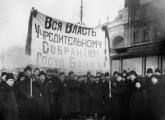
February Revolution of 1917
hidden
|
Alexandra Fedorovna, Empress (1872-1918)
ALEXANDRA FEDOROVNA (1872-1918), Empress (from 1894). Nee Victoria Alix Helena Brigitte Louise Beatrice, Princess of Hessen-Darmstadt. Wife of Emperor Nicholas II (from 1894)
|
|
|
|
|
hidden
|
Archive of Cinema, Photography and Audio Documents, St. Petersburg
ARCHIVE OF CINEMA, PHOTOGRAPHY AND AUDIO DOCUMENTS, St. Petersburg (2 Muchnoy Lane) was founded in 1936 as Leningrad Regional Photo Archive, 1941-66 it was a part of the State Archive of the October Revolution and Leningrad Region Socialistic
|
|
|
|
|
hidden
|
Archives, St. Petersburg
ARCHIVES, SAINT PETERSBURG, the Central State Archives of St. Petersburg situated at 15 Varfolomeevskaya Street. They were founded as the Leningrad Regional Archives of the October Revolution in 1936 and renamed as the State Archives of the October
|
|
|
|
|
hidden
|
Balk A.P., the city guard 1916-17
BALK Alexander Pavlovich (1866-1957), statesman, Major General (1912). He graduated from the First Cadet Corps (he was a classmate of the future last minister of Internal Affairs of the Russian empire A. D
|
|
|
|
|
hidden
|
Bolshoy Dom
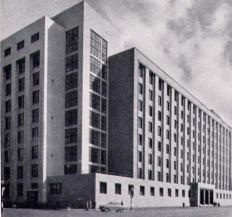
BOLSHOY DOM (Big House)(4 Liteiny Avenue), the name Leningraders gave to the administrative building where the bodies of Joint State Political Administration Board (OGPU), People's Commissariat of Home Affairs
|
|
|
|
|
hidden
|
Brothel (entry)
BROTHEL (maison of tolerance), establishments where prostitutes provided sexual services for men. Secret houses of prostitution existed in St. Petersburg since the 18th century the first official public houses (brothels) appeared in 1843
|
|
|
|
|
hidden
|
Capital
CAPITAL. St. Petersburg was the capital of Russia from the 1710s until 10-11 March 1918. The city's status as capital came quite spontaneously, and was mostly due to Tsar Peter the Great's having settled there
|
|
|
|
|
hidden
|
Cemeteries (entry)
CEMETERIES. Even before the foundation of St. Petersburg there were several necropolises on the location of the future city: the records of the beginning of the 18th century indicate a Finnish-Swedish cemetery at Elagin (Aptekarsky) Island
|
|
|
|
|
hidden
|
Central Duma
CENTRAL DUMA (Central City Duma) is the elected organ of city self-government. It was set up by the Provisional Government after the February revolution of 1917, dealing with the same problems as the previous City Duma
|
|
|
|
|
hidden
|
Chaykovsky N.V. (1850-1926), revolutionary, political figure
CHAYKOVSKY Nikolay Vasilievich (1850-1926) was a political figure. On graduating from the 7th St. Petersburg Gymnasium (1868) he studied at the Faculty of Natural History of St. Petersburg University
|
|
|
|
|
hidden
|
Chkheidze N.S. (1864-1926), a revolutionary, chairman of Petrograd Soviet in 1917
CHKHEIDZE Nikolay Semenovich (party pseudonym Carlo) (1864-1926), political figure. After graduating from Kutaisi gymnasia (1887) he entered Novorossiisk University (Odessa), but was soon expelled due to his participation in students' disorders
|
|
|
|
|
hidden
|
City Administration (entry)
CITY ADMINISTRATION. The system of City Administration in St. Petersburg from the beginning of the 18th century developed in 2 directions - the city government and self-government (see City self-government). From 1703 the city was governed by A. D
|
|
|
|
|
hidden
|
City Duma
CITY DUMA, administrative body of the city government. It was instituted in 1786 by Cities letter of grant (1785). City Duma was in charge of the city economy, taxes and levies, trade, medicine, education etc
|
|
|
|
|
hidden
|
Constituent Assembly, All-Russian
ALL-RUSSIAN CONSTITUENT ASSEMBLY, a body of representatives established on the basis of universal suffrage in order to form a government and draft a Constitution for Russia
|
|
|
|
|
hidden
|
Dan F. I. (1871-1947), Social Democrat, Menshevik
DAN (birth name Gurvich) Fedor Ilyich (1871, St. Petersburg - 1947), a statesman. On graduating from the Faculty of Medicine of Yuryev University (1895) Dan worked as a doctor of Obukhovskaya Hospital of St. Petersburg
|
|
|
|
|
hidden
|
District Court
DISTRICT COURT, a judiciary body, established in the course of the Judiciary reform of 1864. Consisted of a chairman, his deputy and members of the court (appointed by the minister of Justice)
|
|
|
|
|
hidden
|
District Soviets
DISTRICT SOVIETS, organs of state power on the territory of city districts in 1917-93. They appeared in the course of February revolution of 1917 as elected political organizations of workers and soldiers' deputies (17 District Soviets were formed
|
|
|
|
|
hidden
|
Dubrovin A. I. (1855-1921), public figure
DUBROVIN Alexander Ivanovich (1855-1921) was a doctor, political and public figure, State Counsellor. On graduating from the Medical Surgical Academy (1879) he served as a military doctor. From 1889, he worked in children's orphanages of St
|
|
|
|
|
hidden
|
Ekaterinhof
EKATERINHOF, a country estate. Tsar Peter the Great presented it to his wife Ekaterina Alexeevna (the future Empress Catherine I) in 1711. It was situated on Ekaterinhofsky Island
|
|
|
|
|
hidden
|
Factories and Plants' Committees
FACTORIES AND PLANTS' COMMITTEES, elected bodies of workers and employees' for self management. Emerged after the February Revolution of 1917, in contrast to trade unions
|
|
|
|
|
hidden
|
Free Economic Society
FREE ECONOMIC SOCIETY, the Imperial Free Economic Society for the Encouragement of Farming and Housebuilding in Russia, the oldest Russian scientific society. It was founded in 1765 by large landowners striving for higher agricultural efficiency;
|
|
|
|
|
hidden
|
Funeral Rites (entry)
FUNERAL RITES. Burials during the building of St. Petersburg were noted for their utmost simplicity. As C. Weber (1718) witnessed, "a body wrapped in a coarse bast sack, tightened with ropes, and put on a bier
|
|
|
|
|
hidden
|
Head of the city administration
HEAD OF THE CITY ADMINISTRATION, the highest administrative and police rank in St. Petersburg. The post was introduced with the publication of the Regulations as of March 20, 1873 on St. Petersburg cessation from St
|
|
|
|
|
hidden
|
Highest Organs of State Power (entry)
HIGHEST ORGANS OF STATE POWER. The first higher organ of state power to function in St. Petersburg was the Senate founded by Tsar Peter the Great in 1711. The Supreme Privy Council was founded under Empress Catherine I (1725-30)
|
|
|
|
|
hidden
|
His Imperial Majesty Personal Railway Regiment
The fist units of the Russian Railway Troops – the railway armed guards – were established in 1870; they were attached to railways. The total number of the Troops didn’t exceed 1000 people
|
|
|
|
|
hidden
|
House of Preliminary Detention, prison
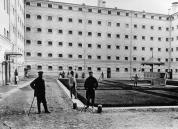
HOUSE OF PRELIMINARY DETENTION (25 Shpalernaya Street), the first remand prison in Russia. It was built in 1871-75 (architect K.Y. Maevsky) who took American system as an example: the doors of cells overlooked stepped iron passages; inside the house
|
|
|
|
|
hidden
|
Inter-Regional Party
INTER-REGIONAL PARTY (from the end of 1914 referred to as St. Petersburg Inter-Regional Committee of United Socialists Revolutionaries and Internationalists) was a socialist democratic organisation in St. Petersburg (Petrograd)
|
|
|
|
|
hidden
|
Kerensky A.F. (1881-1970), political figure
KERENSKY Alexander Fedorovich (1881-1970), political figure and statesman, lawyer. In 1899, he entered the History and Philology Faculty of Petersburg University; in 1900, he moved to the Faculty of Law; after graduating (1904)
|
|
|
|
|
hidden
|
Kodatsky I.F. the chairman of Leningrad Soviet in 1929-37
KODATSKY (Kadatsky) Ivan Fedorovich (1893-1937), Soviet statesman and party worker. He graduated from the vocational school in Nikolaev, worked as a turner there, took part in workers' strikes
|
|
|
|
|
hidden
|
Komarov N.P. the chairman of Leningrad Soviet in 1926-28
KOMAROV Nikolay Pavlovich (born Fedor Evgenyevich Sobinov) (1886-1937), a statesman and Soviet Party worker. Had been living in St. Petersburg since 1902. In 1912 he graduated from the city 4-grade technical school
|
|
|
|
|