|
|
|
The subject index
/
Legislative Assembly
hidden
|
Charter Court
CHARTER COURT (28 Tchaikovskogo Street), the organ of judicial power, upholding the Charter of St. Petersburg and ensuring supremity of law. The Court took office on September 20, 2000 pursuant to the Law of St. Petersburg dated June 5, 2000
|
|
|
|
|
hidden
|
Charter of St. Petersburg
CHARTER OF ST. PETERSBURG, the main normative document of the city adopted by the Legislative Assembly of St. Petersburg on January 14, 1998, signed by the Governor on February 28, 1998. It is comprised of 12 chapters and 80 articles
|
|
|
|
|
hidden
|
City Administration (entry)
CITY ADMINISTRATION. The system of City Administration in St. Petersburg from the beginning of the 18th century developed in 2 directions - the city government and self-government (see City self-government). From 1703 the city was governed by A. D
|
|
|
|
|
hidden
|
City Self-Government
CITY SELF-GOVERNMENT, elected organs responsible for different aspects of city life. The beginning of City Self-Government was laid by Tsar Peter the Great, who set up the Town council in 1710 in St. Petersburg
|
|
|
|
|
hidden
|
Honorary Citizen of St. Petersburg
HONORARY CITIZEN OF ST. PETERSBURG, an honorary title conferred on people who made a considerable contribution to the development of the city. In 1866-1908, 7 persons were conferred this title (the conferring didn"t entail any material privileges or
|
|
|
|
|
hidden
|
Leningrad Soviet
LENINGRAD SOVIET (Leningrad City Soviet of People"s Deputies), the supreme authority on the terriory of Leningrad. It originated from Petrograd Soviet of working people and soldiers" deputies founded on February 27 (March 12 New Style)
|
|
|
|
|
hidden
|
Mariinsky Palace
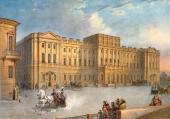
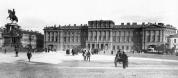
MARIINSKY PALACE (6 St. Isaac's Square), an architectural monument of late Neoclassicism. It was constructed in 1839-1844 (architect A.I. Stakensсhneider) on the left bank of the Moika River, close to the Siny Bridge
|
|
|
|
|
|
hidden
|
|
hidden
|
|
hidden
|
|